

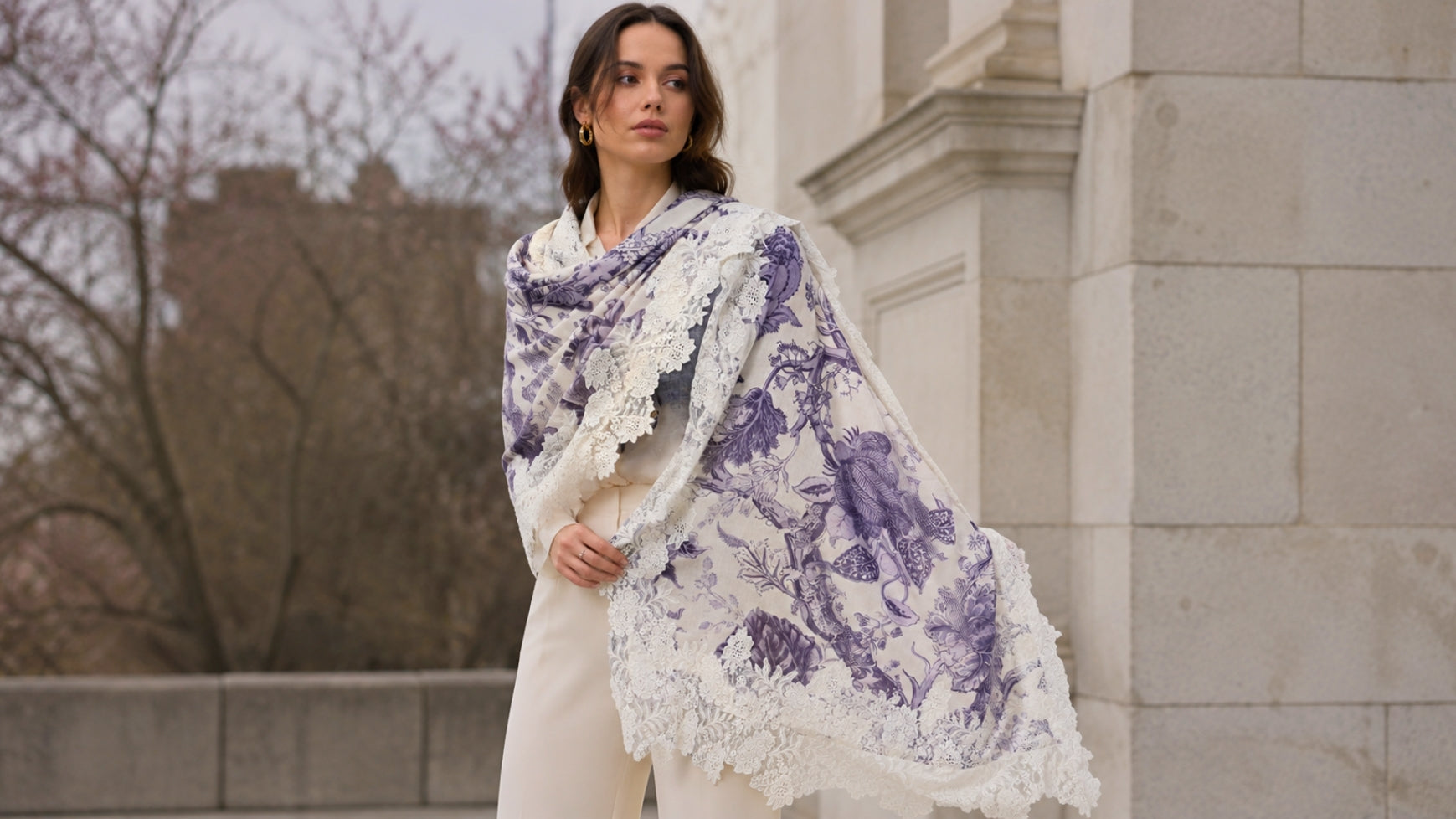
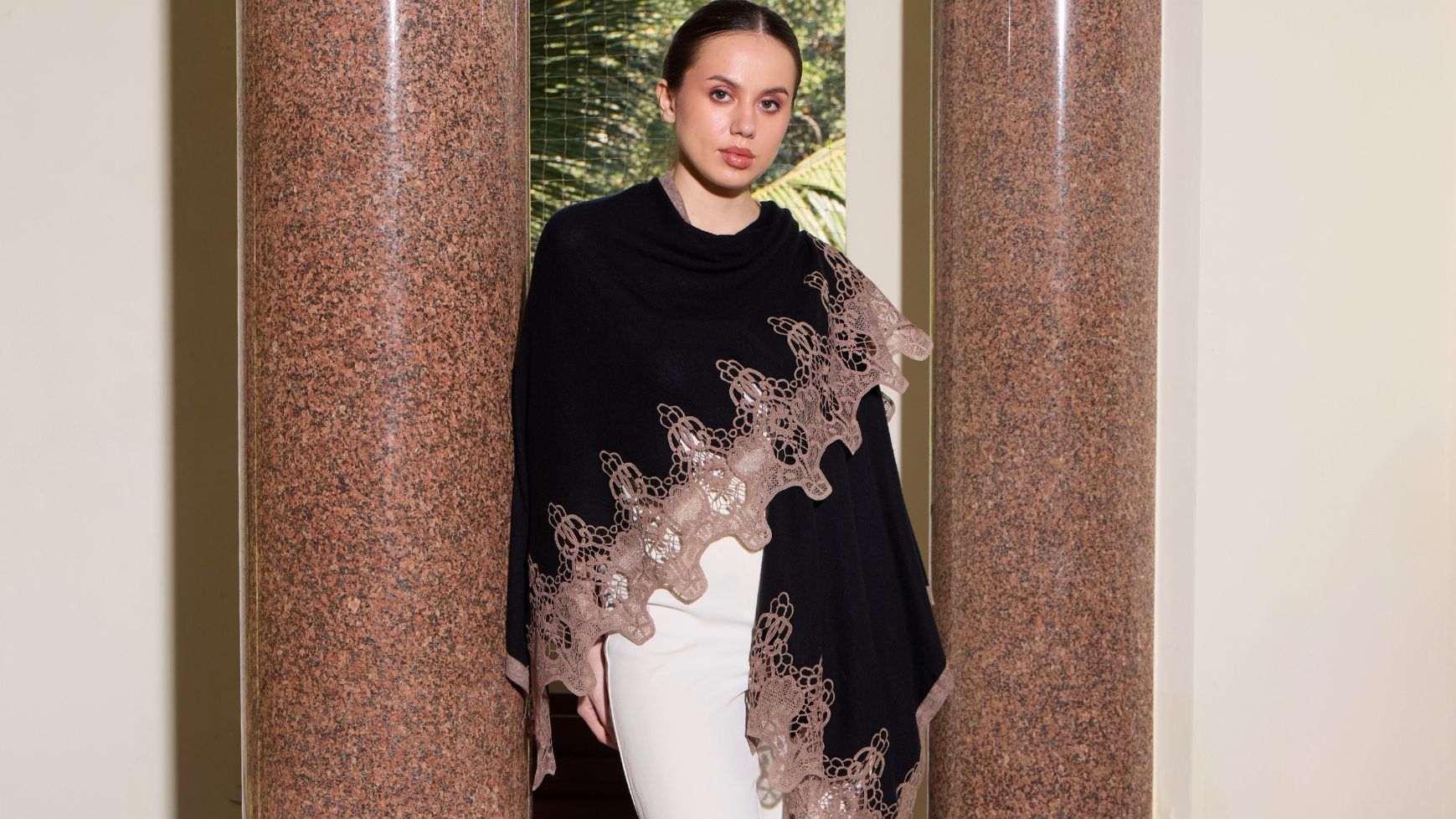
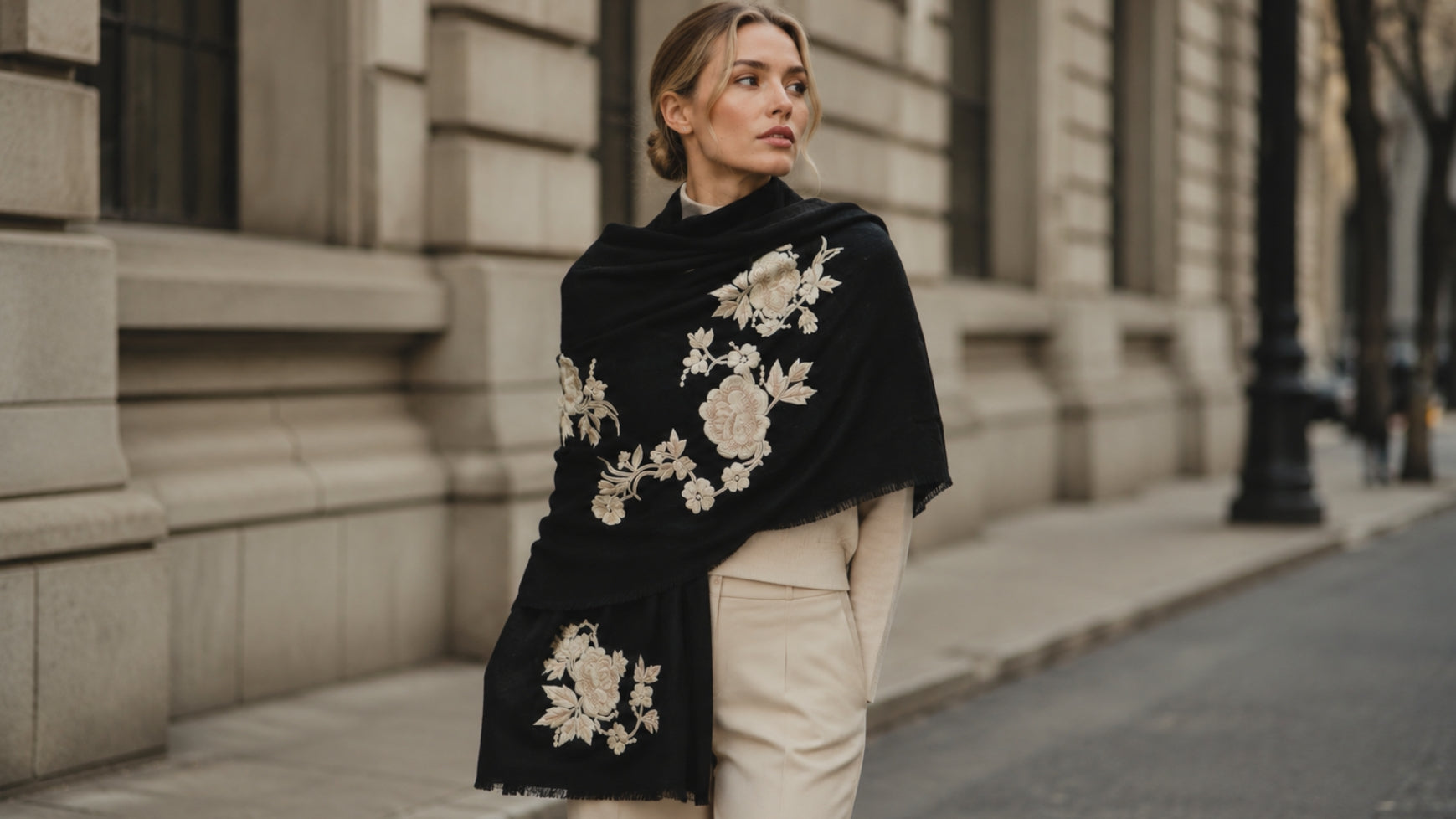
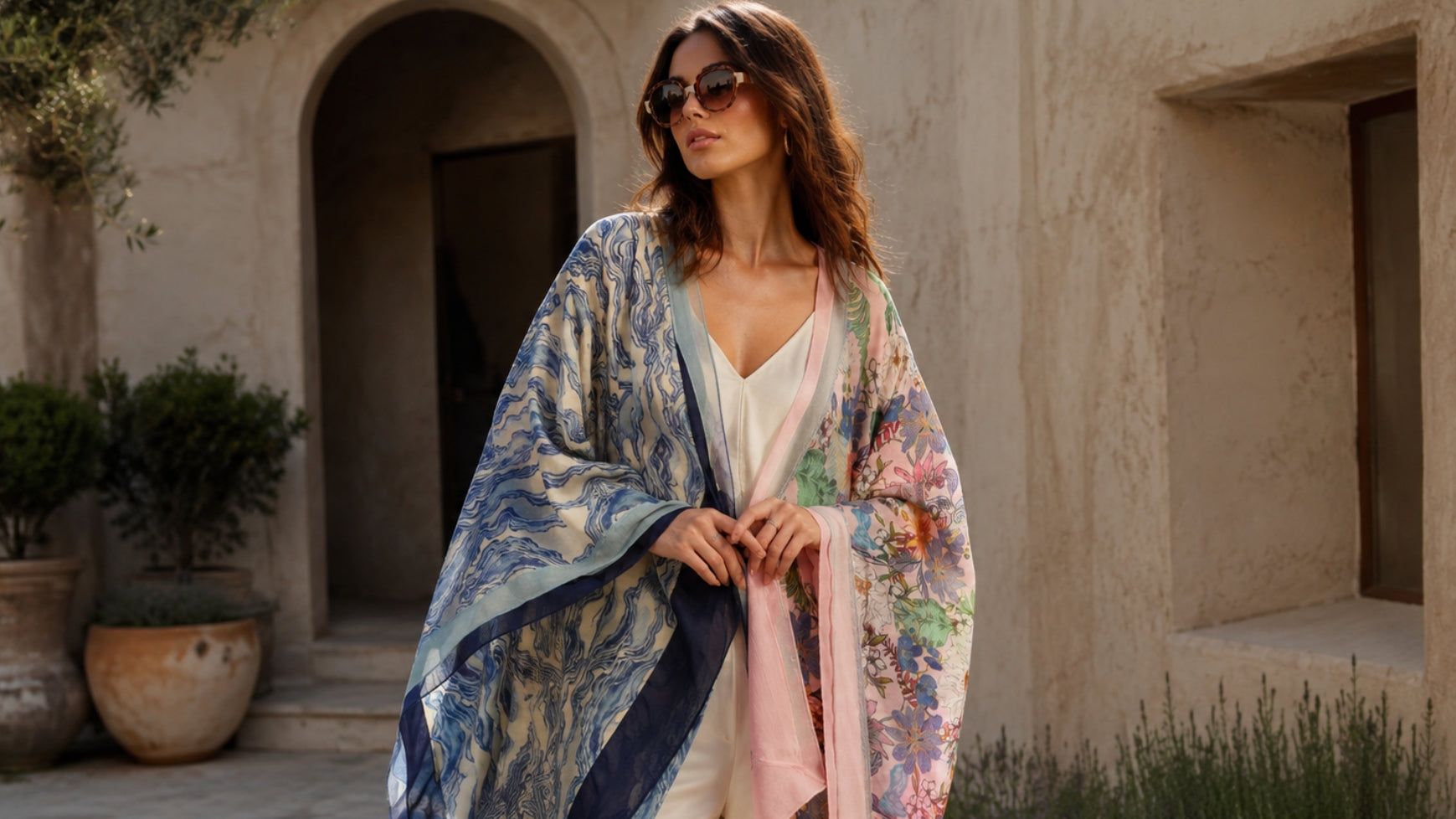
Scarf, Shawl, Wrap, Stole, and Pashmina: Understanding the Difference


A scarf. A shawl. A stole. A wrap. A pashmina.
The words appear so often in the language of dressing that they can seem interchangeable. And sometimes, they really are. A generously sized cashmere piece may be called a wrap when it is draped over the shoulders, a shawl when it is worn over an evening dress, or a scarf when folded at the neck.
But there are distinctions worth knowing.
They are not always a matter of measurements, but of proportion, drape, material and the way a piece is intended to be worn. Understanding those differences does more than settle a question of terminology. It can help you choose the piece that fits naturally into the way you dress.
What sets them apart
The most important distinction to begin with is that a scarf, shawl, stole, and wrap generally describe a piece's form or function. Pashmina describes its material.
|
Type |
What it generally describes |
How it is |
What to |
|
Scarf |
A narrower piece, often rectangular or square |
Around the neck, folded, knotted or draped |
Proportion, drape and versatility |
|
Shawl |
A larger piece designed for broader coverage |
Draped over the shoulders or wrapped around the body |
Warmth and silhouette |
|
Stole |
A long, relatively narrow rectangular piece |
Draped across the shoulders or arms |
Length, fluidity and occasion |
|
Wrap |
A generous piece designed for versatility |
Around the shoulders, neck or upper body |
Ease of layering |
|
Pashmina |
A fine cashmere fiber/material |
Depends on the shape of the finished piece |
Fiber quality, provenance and craftsmanship |
These are useful distinctions rather than rigid rules. In contemporary fashion, the same piece can move between categories depending on its proportions and the way it is styled.
What is the difference between a scarf and a shawl?
The easiest way to tell a scarf from a shawl is its size and proportions. But to decide which is right for you, consider how you want to style it.
A scarf is generally designed to sit closer to the neck. Tucked beneath a coat, looped around the neck or tied loosely over a shirt, it adds definition without necessarily becoming the centre of the outfit. Its appeal lies in detail: a particular print, an intricate edge, a touch of embellishment, a beautiful fold.
A shawl, by contrast, has more presence. Its generous proportions allow it to rest across the shoulders and upper body, framing rather than simply finishing an outfit. It can soften a tailored silhouette, envelop an evening dress or become the layer that defines an entire look.
Neither is more formal or more refined. They simply create a different relationship between fabric and silhouette.
What is a stole?
A stole occupies an elegant middle ground, distinguished less by a strict measurement than by its long, elongated character.
Traditionally rectangular and narrower than a generous shawl, a stole is designed to fall with a certain fluidity. It can be placed over the shoulders, allowed to trail down the front of an evening dress or wrapped once for a more contained silhouette.
Think of the way a silk or finely worked piece falls over the shoulders of an evening dress. A stole frames the outfit beautifully. It lengthens an outfit rather than adding volume to it. It has an affinity with evening dressing, clean tailoring and occasions where the smallest shift in proportion can change the entire look.
If your wardrobe leans towards long silhouettes and understated jewelry, a stole may feel instinctively right.
Wrap vs. shawl: Where the lines begin to blur
This is where terminology becomes less precise because “shawl” describes a form, while “wrap” often describes how a piece is intended to be used.
A large rectangular textile can function as both.
Draped loosely around the shoulders, it can provide the generous coverage associated with a shawl. Folded lengthwise and worn around the neck, it can take on the proportions of a scarf. Wrapped around the body on a cool evening, it becomes precisely that: a wrap.
This is what makes the wrap particularly appealing to those who dress with versatility in mind. The beauty is in the freedom to change the drape.
What is pashmina?
Pashmina is the term that perhaps causes the most confusion because, unlike scarf, shawl, stole and wrap, it isn’t distinguished by the shape and character of the finished accessory. It refers to an exceptionally fine cashmere fiber traditionally associated with the soft undercoat of Himalayan goats.
This means a pashmina can take different forms. It can be a scarf, a wrap, or a shawl. What makes it pashmina is the material, not the silhouette.
Pashmina is prized for its extraordinary fineness, softness and warmth, qualities that allow a generously sized piece to feel remarkably light when worn. At its finest, the material also carries a distinctive drape: fluid rather than bulky, soft rather than structured.
Maneesha Ruia’s Pure Pashmina collection is crafted from 100% cashmere pashmina, with fibers in the 12–16 micron range. The material is hand-combed and handwoven on traditional Kashmiri handlooms, with craftsmanship extending into details such as hand embroidery, lace appliqué, sequins and Swarovski embellishment.

When you choose a pashmina scarf, you choose a material with its own history, character and craft tradition.
Why the fabric matters
Once you understand the difference between a scarf and a shawl, another question becomes more interesting: What is it made from?
Two pieces can have almost identical proportions and feel entirely different when worn.
Silk brings fluidity and a naturally luminous surface. Cashmere offers softness and warmth while remaining remarkably light. Pashmina takes those qualities further through an exceptionally fine cashmere fiber.
At Maneesha Ruia, the Scarves & Wraps collection spans materials including cashmere, cashmere pashmina, silk, silk twill, fine wool, linen and modal.
So, which one suits your style?
Once the terminology is clear, choosing becomes less about finding the “right” category and more about how you like to dress.
Choose a scarf if you like...
Precision and finishing touches.
You enjoy the small details that make an outfit feel complete. A scarf lets you introduce color, pattern, texture or embellishment without changing the proportions of what you are wearing.
Choose a stole if you like...
Long, clean lines.
You prefer an accessory that follows the silhouette rather than enveloping it. A stole brings length and movement, making it particularly natural with eveningwear and streamlined dressing.
Choose a shawl if you like...
Presence without structure.
You appreciate generous proportions and the way fabric can frame the shoulders. A shawl can soften a formal outfit, add warmth to an evening look or become an integral part of the silhouette.
Choose a wrap if you like...
Versatility.
You want your accessories to work hard. Something that can be folded, draped, knotted or wrapped differently depending on the setting—and still look considered.
Choose pashmina if you care about...
The material and silhouette.
You notice the way fine fiber feels against the skin, how lightly it falls and how warmth can exist without weight. You are drawn to craftsmanship that rewards a closer look.
And, of course, these choices can overlap. A pashmina can be your scarf. A scarf can become a wrap. A generous rectangular piece can function as a shawl one evening and be worn differently the next morning.
Look beyond the label
Ultimately, the difference between a scarf, shawl, stole and wrap is not as rigid as fashion terminology might suggest. Proportions vary, names overlap and the same piece can take on a different character with a different drape.
The questions to ask before you buy are: How do you want it to sit? How do you want it to feel?
Consider the proportion first. Then the fiber. Then the drape and craftsmanship.
Explore Maneesha Ruia's Scarves & Wraps collection to discover handcrafted pieces in cashmere, pashmina, silk and other fine materials.
FAQs
Is a shawl the same as a scarf?
Not quite. A scarf is generally designed to be worn closer to the neck, while a shawl is larger and offers greater coverage across the shoulders and upper body. However, the distinction is not absolute: a generously sized scarf can be worn like a shawl, and a shawl can be folded and styled like a scarf.
What is the difference between a shawl and a wrap?
The terms overlap considerably. A shawl generally describes a larger piece worn across the shoulders or upper body, while "wrap" emphasizes the way a piece can be wrapped or draped. The same accessory may reasonably be described as both.
What is a stole?
A stole is generally a long, relatively narrow rectangular piece designed to be draped across the shoulders or arms. It is particularly associated with elegant evening and formal dressing.
Is pashmina a type of shawl?
Not exactly. Pashmina refers primarily to a fine cashmere fiber, while a shawl describes the form of the finished piece. A pashmina can therefore be made into a shawl, scarf, stole or wrap.
Is pashmina the same as cashmere?
Pashmina is a particularly fine form of cashmere associated with the Changthangi goat. The terms are often used interchangeably in everyday retail language, but pashmina is more specific in reference to the fine fiber and its traditional origin. Maneesha Ruia's Pure Pashmina collection uses 100% Cashmere Pashmina.
What should I look for when buying a luxury scarf or shawl?
Look beyond the name. Consider the fiber, dimensions, weight, drape, craftsmanship and intended use. If you are investing in a piece for years of wear, the quality of the material and finishing is just as important as its shape.


