

How to Choose a Cashmere Lace Scarf: A Buyer’s Guide to Quality and Craftsmanship


A cashmere lace scarf brings together two very different elements: the softness and drape of cashmere, and the intricacy and elegance of lace. Soft against the skin and light enough to drape, it does not just transform an outfit: it becomes a small, recurring signature, the piece that keeps turning up in a wardrobe long after trends have moved on.
Choosing one, however, takes more than falling for a beautiful pattern. The quality of the cashmere, the placement of the lace, and the care with which the two are brought together all shape how the scarf looks and feels when you drape it.
Here is what is worth noticing before you commit to a piece you intend to wear for years.
How to choose a high-quality cashmere lace scarf
The finer details tend to matter as much as the first impression, if not more. A beautiful scarf may catch your eye, but its quality reveals itself in the fall of the fabric, the finish of an edge, and the way the lace has been worked into the scarf.
Here is what to look for:
Start with the fibre composition
Begin with the fabric itself. Is the scarf made from 100% cashmere, or is it a blend? Check the product description or label for clear information about the exact fibre composition, how and where the material has been sourced and finished.
Cashmere blends can offer their own qualities, but a 100% cashmere scarf has a softness, warmth and handmade feel that is distinctly its own. Good cashmere feels natural rather than slick to the touch, with body to drape well without ever feeling heavy.
Consider ply and construction
Ply refers to the number of yarn strands twisted together to make the yarn. A single-ply scarf uses one strand, while in a two-ply scarf, two strands are twisted together.
The distinction shapes the finished fabric's structure, weight and feel. A lighter construction moves fluidly and folds easily around the neck. A more substantial one holds its shape and offers more presence when draped.
Pay attention to weight and drape
Cashmere earns its reputation for being warm without feeling cumbersome. Yet two cashmere scarves can behave quite differently depending on their construction and weight.
Hold the scarf if you can, or study closely how it has been photographed. Does it fall softly? Does it hold its shape when draped over the shoulders? Does the lace move with the fabric, or sit apart from it?
On a lace scarf, these questions matter even more. Where the lace sits and how dense the pattern is can change how the whole piece folds and drapes.
Look closely at the lace
Lace earns attention in different ways. It can be delicate to the point of near-transparency, densely ornamental, or so subtle it only reveals itself when the scarf moves.
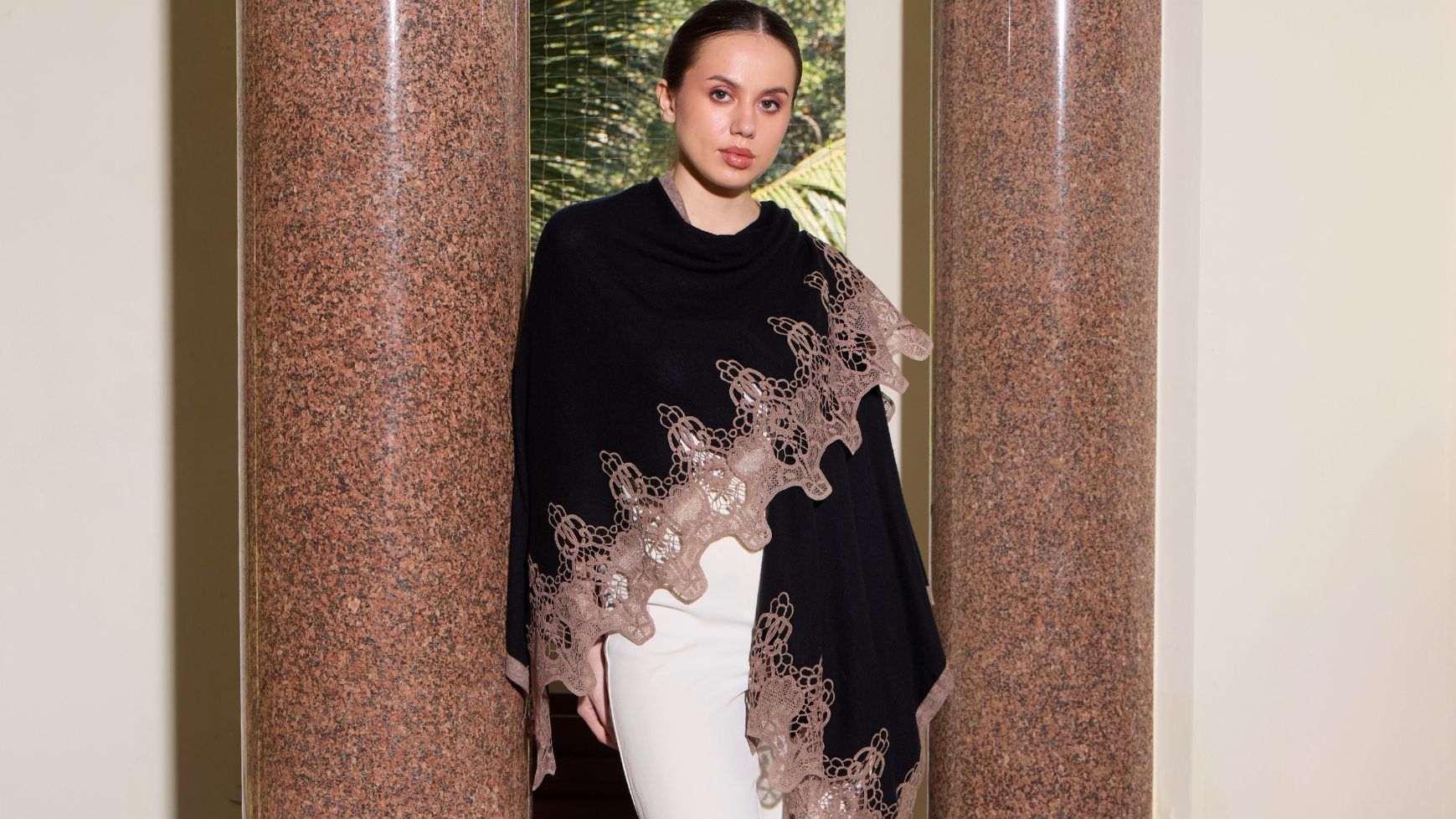
Depending on the design, you may come across different lace types: Chantilly lace is known for its fine, intricate patterns, while Filigree lace creates a more open, ornamental effect. It’s also worth considering how the lace is applied.
 Consider the placement of the lace
Where the lace sits can change the entire character of a scarf.
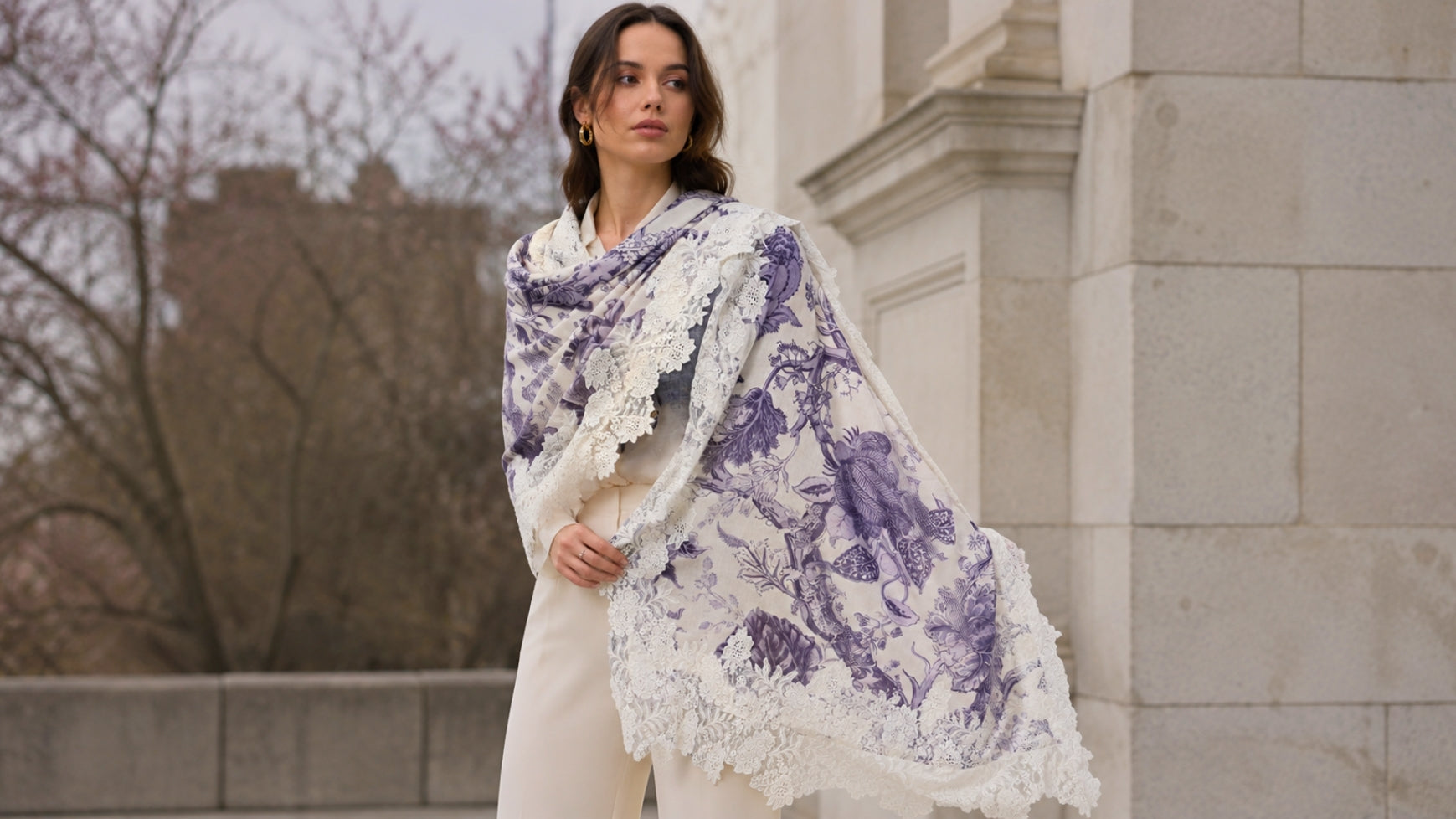
A lace border defines and frames the edge. A larger panel becomes the focal point of the whole design. Appliquéd motifs, scattered rather than fixed to one spot, reveal themselves slowly as the scarf folds and shifts.
The relationship between the lace and the fabric is one of the finer details to notice.
At Maneesha Ruia, lace motifs are cut and positioned by hand before being stitched onto the scarf, a process built on placement as much as precision.This allows each lace motif to be positioned in harmony with the overall composition and follow the natural movement of the fabric.
In more intricate pieces, these decisions reveal more about the craftsmanship than the volume of decoration ever could.
Finishing details
It's easy to be drawn first to a motif, or a color story. But the smaller details are usually where the real thought has gone.
Look at:
The edges: Are they clean and well finished?
The corners: Does the lace transition naturally or fight the seam?
The stitching: Does the lace work look neat and considered?
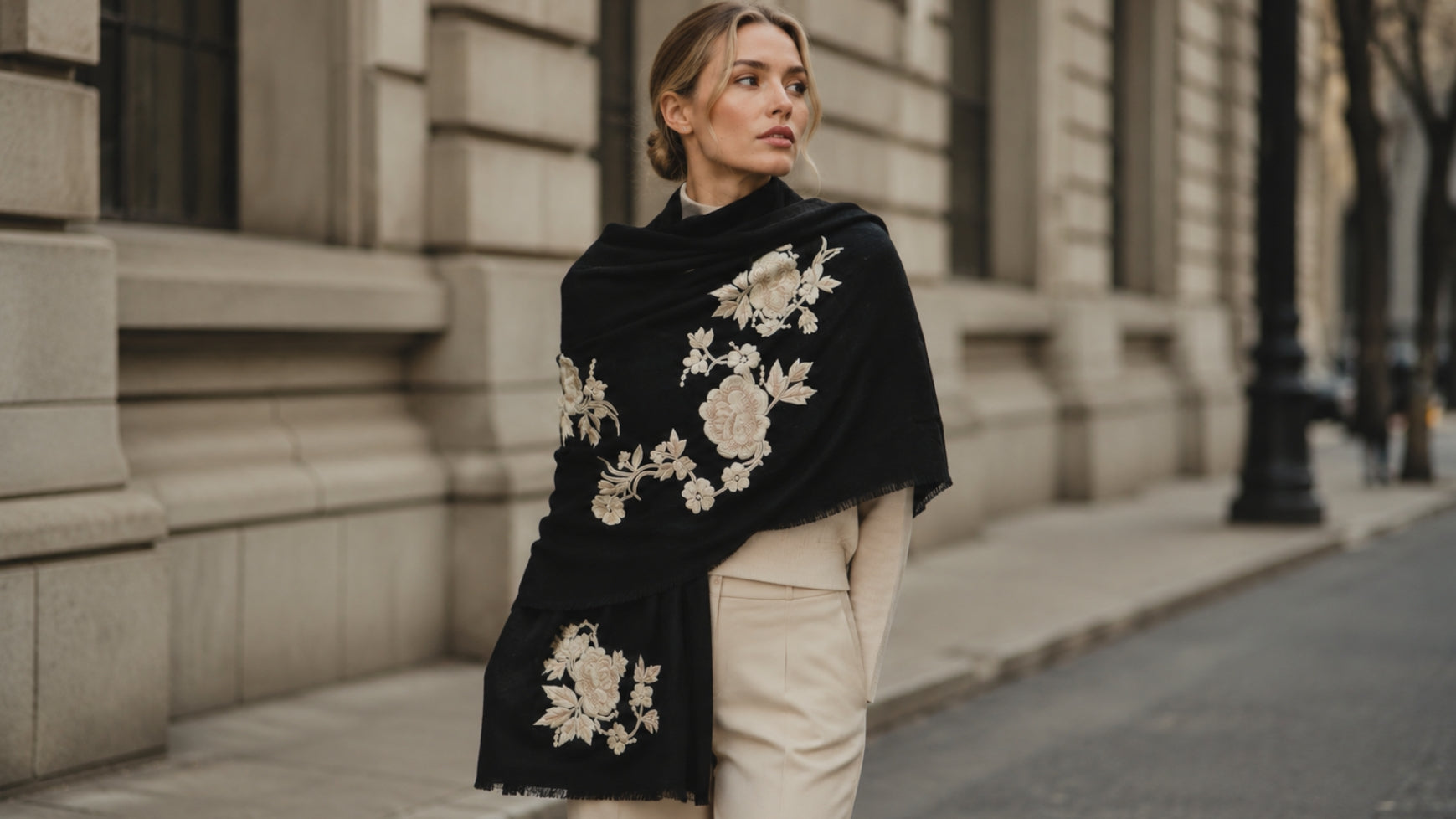
The transitions: Where the lace meets embroidery, print, beadwork or another embellishment, do the elements sit together, or compete?
None of this needs to announce itself. In a finely made piece, good finishing is something you register by the feel of it long before you could describe it.
Choose a cashmere lace scarf for how you’ll wear it
Before choosing a design, think about where you see yourself wearing it.
For everyday dressing
A restrained border or a small motif brings a touch of intricacy to simple dressing, without tipping the piece into occasionwear territory.
Wear it with a crisp white shirt, denim, a cashmere sweater or a plain dress. The lace does the work of interest; the cashmere keeps the overall look effortless.

For work and tailoring
For a polished, professional wardrobe, look for a design where the lace adds detail without competing with the outfit around it.
Draped loosely over a blazer or a tailored coat, it softens structured pieces and finishes the look without adding weight to it.

For evening dressing
Evening is where a lace scarf can take up a little more space.
A detailed border or a larger motif can become part of the outfit in its own right. Rather than wrapping it close, let it fall open over the shoulders, so the work in the lace stays visible.

For weddings and special occasions
Cashmere and lace pair extremely well when an occasion calls for both warmth and a certain formality.
A lace-trimmed cashmere scarf can be draped over a dress or occasionwear without overwhelming it. If you are choosing one for a wedding, consider the overall mood of the outfit rather than trying to match every detail. Sometimes the best pairings often complement rather than mirror.
For bridal dressing, explore our bridal scarves.

For travel
A genuinely useful accessory earns its place by working across more than one occasion.
A cashmere lace scarf can accompany you through an entire day: worn around the neck while travelling, draped over the shoulders at dinner or layered over a coat when the temperature drops.
The more naturally it fits into different parts of your wardrobe, the more likely it is to become one of those pieces you reach for without thinking twice.
Frequently Asked Questions
Is a cashmere lace scarf made entirely from cashmere?
Not necessarily. The term generally refers to a cashmere scarf that incorporates lace as a separate design element. Always check the product's stated fibre composition to understand exactly what the scarf is made from.
Is a two-ply cashmere scarf better than a single-ply scarf?
Not necessarily. Ply describes how many yarn strands are twisted together and can influence the scarf's structure, weight and feel. The right choice depends on how you want the scarf to look and wear.
What is a Chantilly lace scarf?
A Chantilly lace scarf is a scarf that incorporates Chantilly lace into its design. Chantilly is particularly associated with fine, detailed lace patterns and can create an intricate, delicate effect when used on a scarf.
How to test the quality of cashmere fabric by hand?
Hold the fabric between thumb and forefinger. Quality cashmere has a slight grip, not a slippery synthetic slide. It should feel substantial without feeling heavy.
How can I tell if the lace is hand-stitched or machine-applied?
Look closely at the back of the scarf: hand-stitched work can reveal itself through the careful stitching and the way the lace has been positioned, while machine or fused lace looks mechanically uniform. Hand-stitched lace sits slightly raised from the cashmere base, while machine-applied lace sits flat.
Can I wear a cashmere lace scarf every day?
Absolutely. The design you choose will determine how easily it moves between occasions. A more restrained lace border can work beautifully with denim, knitwear and tailoring, while more elaborate designs can become the focal point of an evening or occasion look.
Are cashmere lace scarves only suitable for winter?
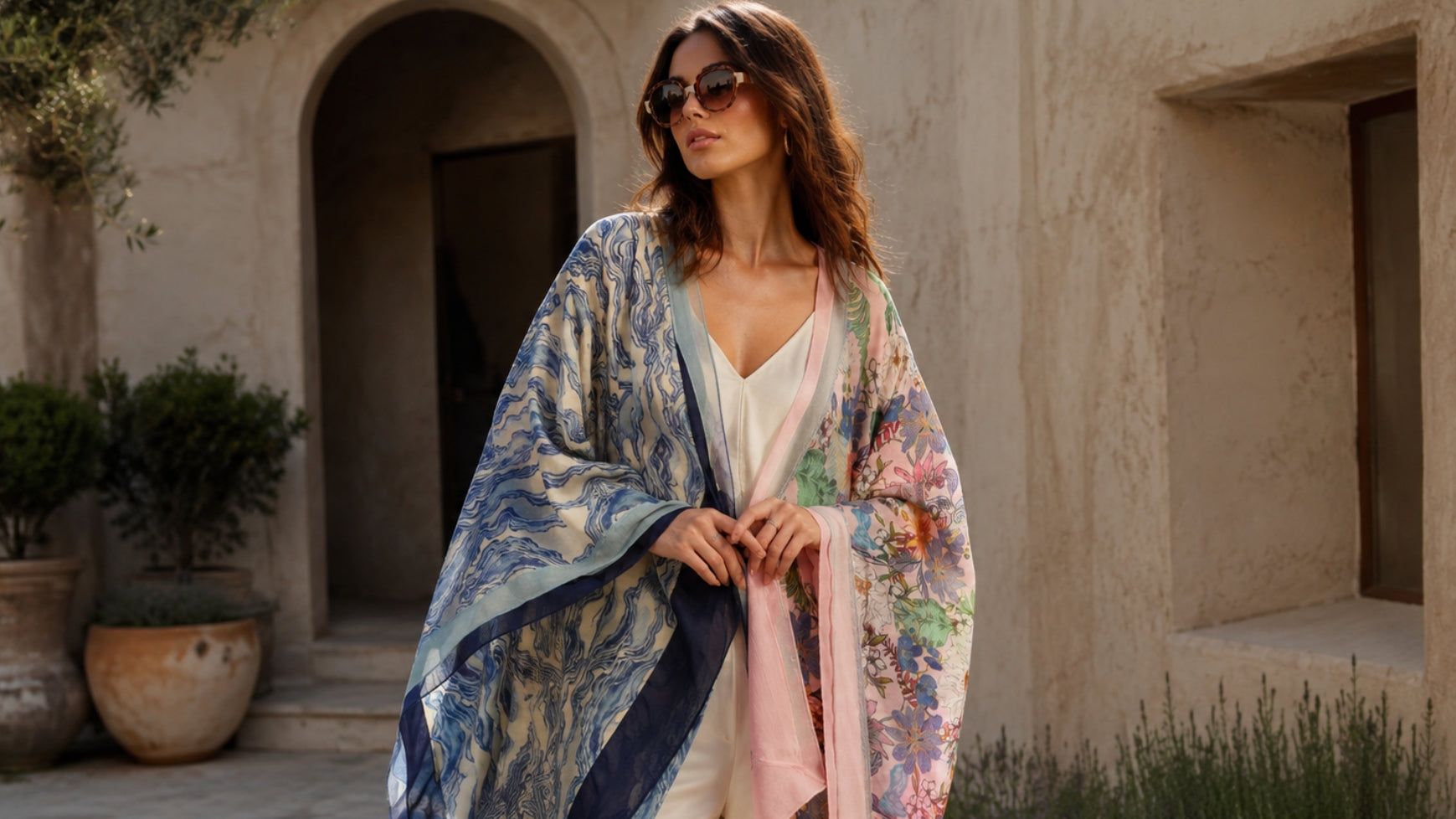
Cashmere is naturally associated with cooler weather, but weight and construction make a difference. A lighter cashmere scarf can be worn loosely over the shoulders rather than wrapped closely, making it useful across different settings and seasons.
How should I wash a cashmere lace scarf?
Always follow the care instructions provided by the maker. For Maneesha Ruia cashmere scarves, the recommendation is dry clean only. Steam ironing should be avoided, and an iron should never be placed directly over lace or embellishments.
How do I choose between a cashmere scarf with lace and a silk scarf with lace?
Think about how you want the scarf to feel and when you expect to wear it. Cashmere offers softness and warmth, while silk tends to feel lighter and more fluid.
The choice comes down to your wardrobe, climate and the occasions you have in mind. A cashmere scarf with lace can bring warmth and intricate detail to cooler-weather dressing, while a silk scarf with lace can offer a lighter expression of the same elegance.


