How to Wear a Scarf: 10 Styling Options for Every Occasion


A scarf is perhaps the most quietly transformative accessory a woman can own. It requires no alterations, works across every body type, transitions between seasons with the right fiber weight, and can shift an outfit from simply assembled to genuinely complete in the time it takes to drape it. Yet for many women, a beautiful scarf ends up folded away rather than worn, not because it is not loved, but because knowing how to style a scarf with real confidence is a skill that most people are never actually taught.
This guide is built to address exactly that. Whether you are reaching for a scarf for the first time or looking to expand the ways you wear the pieces already in your wardrobe, the ten methods here cover every context in which you would reach for one: the office, the airport, the formal dinner, and Saturday afternoon. You will find guidance on how to wear a long scarf without the fabric controlling you, how to wear a scarf around your neck so that it holds its shape through a full day, and how to wear a scarf professionally without diluting the authority of your look. All ten methods are practical, all are replicable within seconds, and each one has been chosen specifically because it earns its place across real occasions, not just editorial ones.
The Principles That Make Every Style Work
Before moving into the ten methods, there are three principles worth holding, because they apply to every configuration in this guide, and they are the difference between a scarf that looks deliberate and one that simply looks draped.
The first is that the anchor always precedes the drape. Every scarf style that holds its shape over the course of a full day is built on a single point of anchor: a fold, a knot, or a tuck. The drape is the finish. It is not the foundation. Establish the anchor first, then allow the fabric to fall naturally from that point.
The second is that proportion governs the result. A scarf that is too long or too voluminous for a given style will overpower the wearer rather than complement her. Fold it in half before draping. Tuck a section into a coat lapel to reduce visual bulk. The goal is to let the scarf contribute to the composition of the look, not dominate it.
The third is that fabric determines formality. A linen-modal blend reads as relaxed and polished. A fine cashmere or pure pashmina reads as dressed. Match the fiber to the occasion first, and let color and pattern be secondary decisions. A beautiful scarf worn in the wrong context will always feel slightly wrong, regardless of how well it is tied.
With those principles in place, here are ten ways to wear a scarf with full confidence.
The Classic Drape
The classic drape is the most instinctive entry point into scarf styling, and consistently one of the most enduring. Place the scarf across the back of the neck and allow both ends to fall forward over the chest. Adjust so that one end sits slightly shorter than the other, perfect symmetry here tends to read as studied rather than composed. The difference is subtle, but it is visible.
Over a fine-knit turtleneck, a crisp white shirt, or a structured coat, the classic drape adds immediate presence without requiring deliberate effort. The key variable is the weight and quality of the fiber. The Natural Superfine Cashmere Pashmina Scarf produces a drape that moves with the body rather than lying flat against it, breathable enough to wear through a full day, fine enough to fold into a coat pocket at the end of it. It is available in eight colorways spanning classic neutrals to soft pastels, and it is the kind of piece that enters a wardrobe and stays in it for decades.

The European Loop
Also known as the Parisian knot, the European loop is the most reliable answer to how to properly wear a scarf around your neck over the course of a long day. Fold the scarf in half lengthwise, bringing the two loose ends together in one hand. Place the folded midpoint at the front of the neck, bring both ends to the back, then thread them through the loop at the back and draw gently until snug at the collarbone.
The result is a neat, structured configuration that sits cleanly beneath a coat collar without bunching, holds its position without constant adjustment, and has the added quality of answering, definitively, the question of how to wear a long scarf without being overtaken by it. Folding halves the effective length and compresses the fabric into a form that behaves precisely where it is placed. A mid-weight wool-silk blend makes this particularly effective from autumn through early spring: the wool content holds the loop's structure, while the silk gives the visible surface a quality of light that a purely woolen scarf cannot match.
The Shawl Wrap
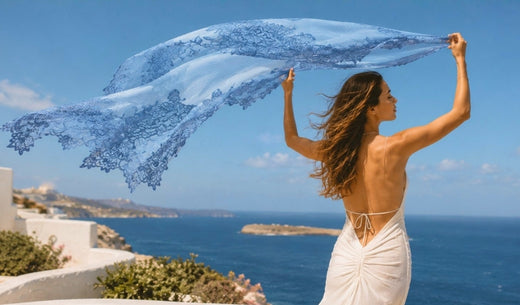
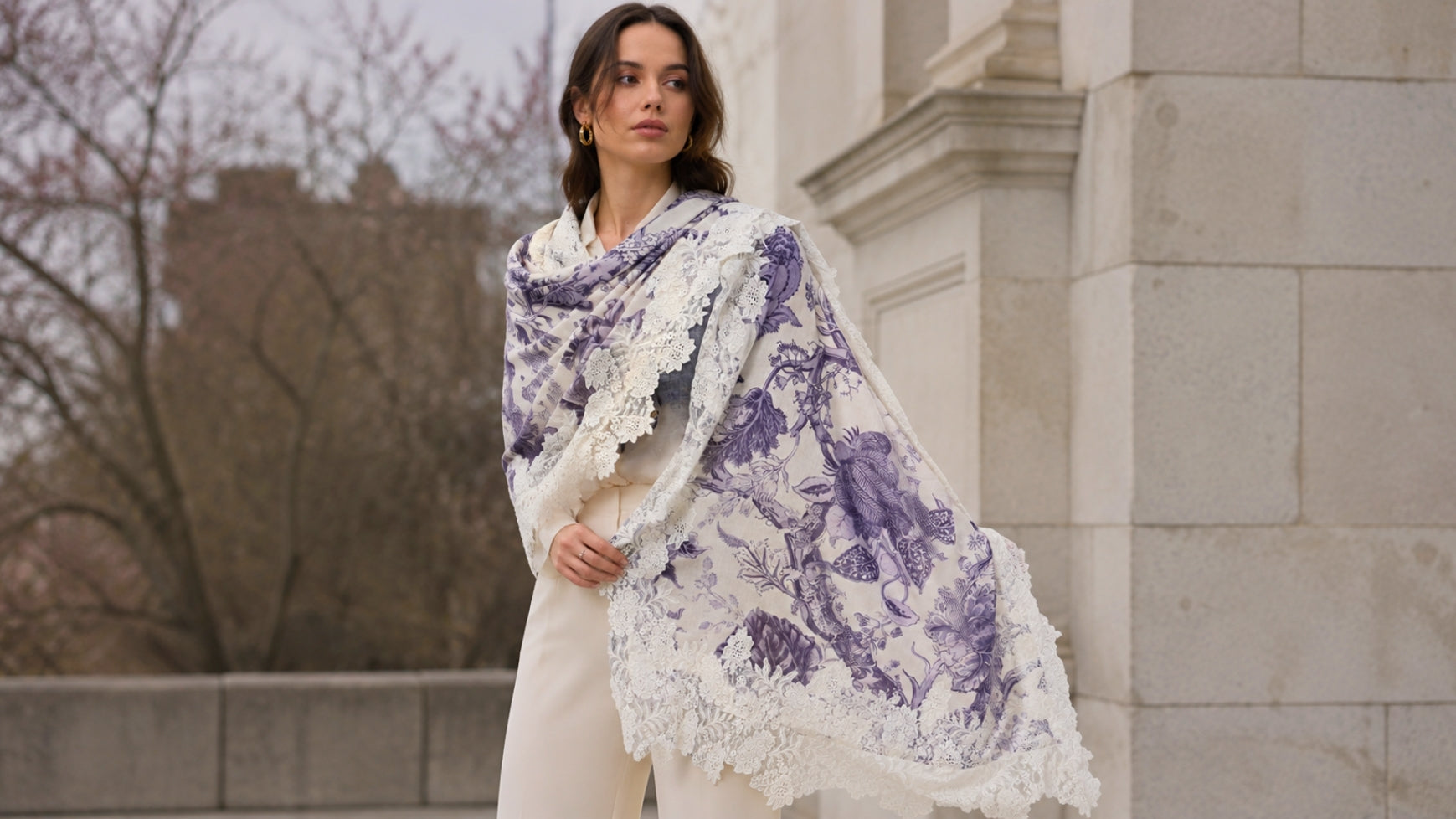
Knowing how to wear a scarf as a shawl opens the accessory to the full range of occasions where a coat is excessive but bare shoulders are too cool, formal dinners, gallery evenings, outdoor ceremonies, and late-summer events where the temperature turns after dark. The execution is simple. Open the scarf to its full width and lay it symmetrically across both shoulders, holding the two front edges loosely together at the center of the chest.
For greater security without a clasp or pin, cross the two ends at the front, pass each one under the opposite arm, and allow them to fall down the back. The resulting structure holds through an entire evening without adjustment, and it does so without disturbing the fluid, unfastened quality that distinguishes a well-worn shawl from something stiffer and more deliberate.
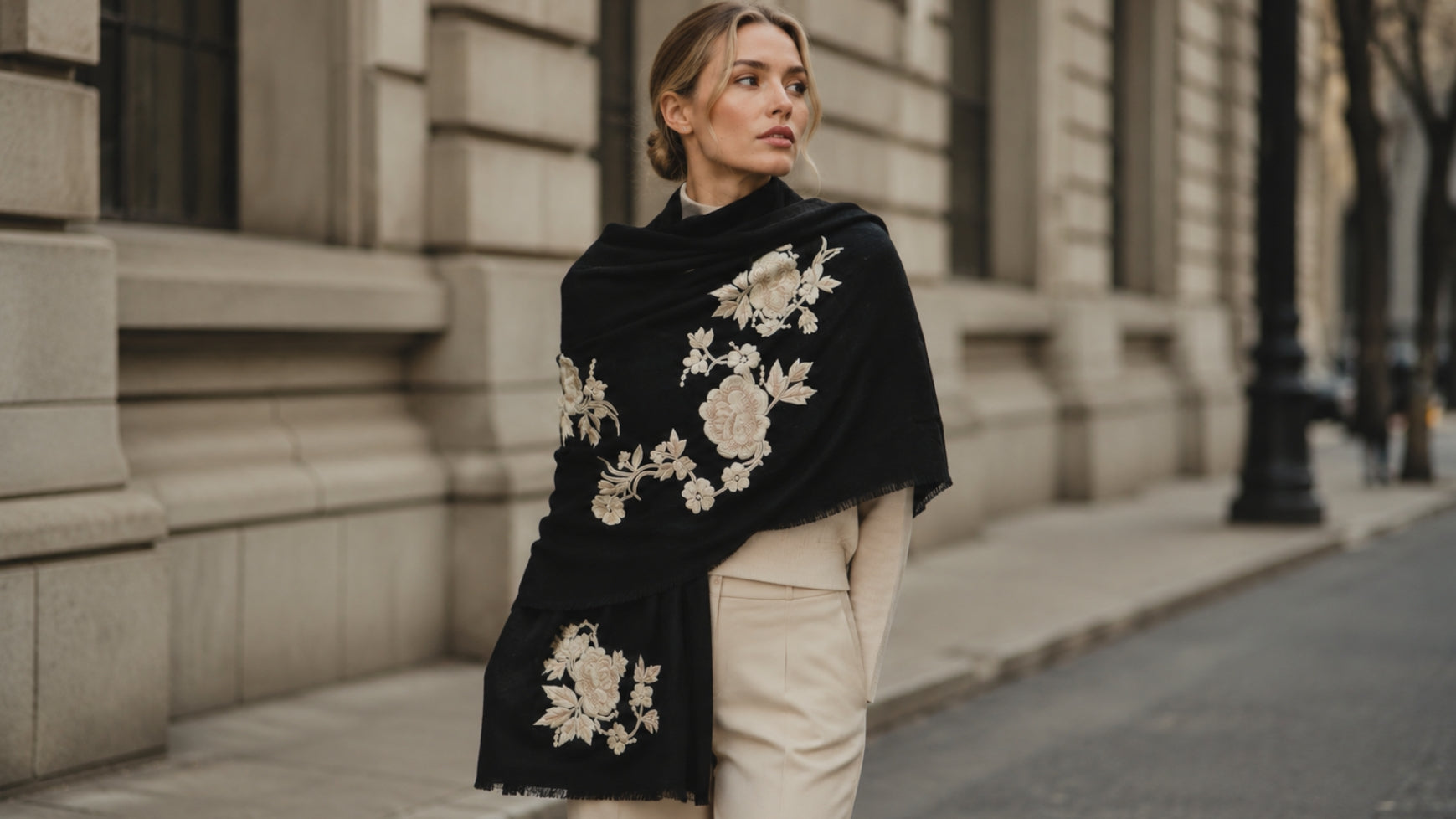
A scarf with hand-applied embellishment or lace detailing shows at its most beautiful in this configuration, the full surface is visible and unobstructed, and every handcrafted detail earns its place. The Black Cashmere Scarf with Gold Chantilly Lace, with its vine-pattern lace extending inward from both ends against deep cashmere, is precisely the kind of piece that transforms this simple styling method into something memorable. It is among the black scarves in the collection that move seamlessly from afternoon to formal evening without a change of outfit.

The Belted Wrap
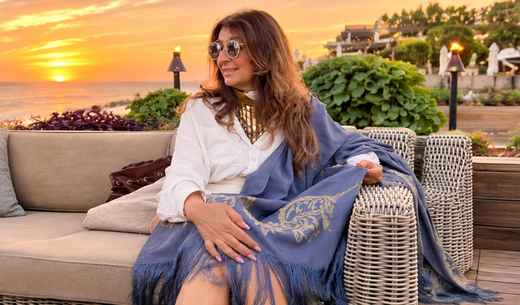
The belted wrap extends the shawl one deliberate step further by cinching it at the natural waist with a slim leather or fabric belt. Drape the scarf across the shoulders first, then secure it at the waist. The gathered folds above the belt should fall generously and naturally, resist the impulse to smooth them flat or pull the fabric taut. The texture and volume above the belt are the point.
Over a simple dress, a fluid tunic, or wide-leg trousers where the underlying silhouette lacks definition, the belted wrap introduces shape precisely where it is needed and creates a finished, composed look from a very small number of decisions. A scarf with fringing at the edges rewards this treatment particularly well, as the movement of the fringe below the belt adds a final dimension of deliberateness that a plain finish cannot quite replicate.
The Long Drape
The long drape is where most women hesitate, and where confidence, once found, produces some of the most genuinely striking results available to the wearer. The governing principle is vertical alignment. Rather than looping, bundling, or knotting a long scarf at the neck to manage its length, allow it to fall in a single, considered line.
Place the center of the scarf at the back of the neck and allow both ends to drape forward in equal lengths. Then take one end and carry it across the opposite shoulder, allowing it to fall down the back. The asymmetry introduces movement on one side while maintaining a clean vertical line on the other, elongating the figure and bringing quiet presence to even the most minimal outfit.
The Denim Ombré Modal and Cashmere Scarf, a soft blend that shifts from pale mousse through denim blue with delicate mousse lace fringing, is built for exactly this treatment. The gradient reads beautifully as a single vertical line of color moving down the body, and the lace fringing at the edges introduces the kind of artisan detail that becomes visible as the wearer moves. Over a fitted coat or tailored wide-leg trousers, this is a complete statement in itself.

The Neck Tie
A fine scarf folded into a narrow band and tied loosely at the base of the throat is one of the most precise, controlled applications of the accessory, and one of the most immediately effective. Bring the two long edges toward the center of the scarf, fold again until you have a band two to three inches wide, drape it around the neck, and tie in a single loose knot at the front. Let the ends fall freely over a blouse or tuck them under an open collar for a more contained effect.
This styling references the ascot tradition and wears it naturally into the present without feeling nostalgic. It works at a creative workplace, at a weekend lunch, or wherever you want color and pattern to appear with precision rather than volume. The looseness of the knot matters; the fabric should appear entirely unhurried.
The Professional Fold
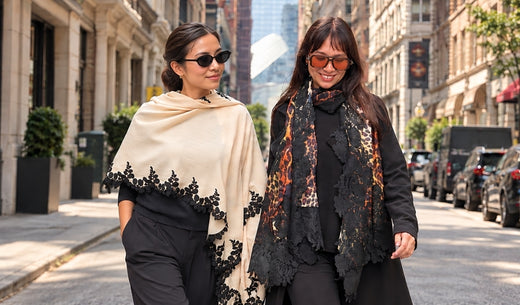
For women who want to know how to wear a scarf professionally without softening the formal register of their dress, the professional fold is the answer. Fold the scarf in thirds lengthwise until it forms a band approximately three to four inches wide. Drape it across the back of the neck and tie a flat, single knot at the center of the chest, keeping both ends even in length and lying cleanly against the shirt beneath.
Worn over a tailored shirt, under an open blazer lapel, or against a structured dress, this introduces warmth, texture, and color to a professional look without loosening a single degree of its authority. Tonal pieces in ivory, charcoal, or camel are the natural first choices here; the fiber and the craftsmanship should register before the color does.
The Taupe Cashmere Scarf with Parsi Gara Embroidery and Black Lace Border carries an exceptional level of handwork; the embroidery across the body required four days of meticulous artisan work per piece. Worn in the professional fold, this detail shows in a concentrated band at the chest: understated from a distance, and extraordinary on closer inspection.

The Hair Wrap
Fold a square or short rectangular scarf diagonally into a triangle, then roll it from the pointed tip toward the folded edge until it becomes an even band. This band can be tied around a low ponytail with the ends trailing loosely at the nape of the neck, wrapped across the crown as a wide headband and knotted at the back, or tied at the side of a low bun for a more structured effect.
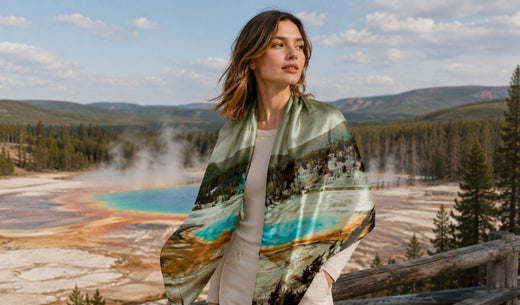
A hand-painted or boldly printed silk piece shows particularly well in the hair, the natural sheen of the fiber catches light in a way that elevates a simple casual look without any additional accessory. It is one of those styling details that requires almost no time to execute and produces a result that appears entirely considered.

The Bag Accent
Not every outfit calls for a scarf at the neck or shoulders, and it should not be forced into those positions when it does not belong there. Threading a lightweight silk or fine linen scarf through the handle or outer loop of a structured bag and tying it in a loose knot, not a bow, contributes exactly the right amount of color and movement without the scarf needing to touch the body at all.
The proportion of the knot matters: generous enough to read as a deliberate choice, not so large that it competes with the bag's own design. A single-color or tone-on-tone piece contributes texture over pattern. This is the styling detail that marks a woman who considers accessories as a complete system rather than as isolated decisions made at the last moment.
The Travel Wrap
A large, lightweight scarf is the single most functional travel accessory a woman can carry, and knowing how to wear it across the full arc of a long journey is what separates a useful travel piece from a beautiful but impractical one. Use the European loop for the airport. Once seated, open it to its full width across the lap and torso. On arrival, refold it as a shawl wrap and step off the aircraft looking composed rather than depleted.
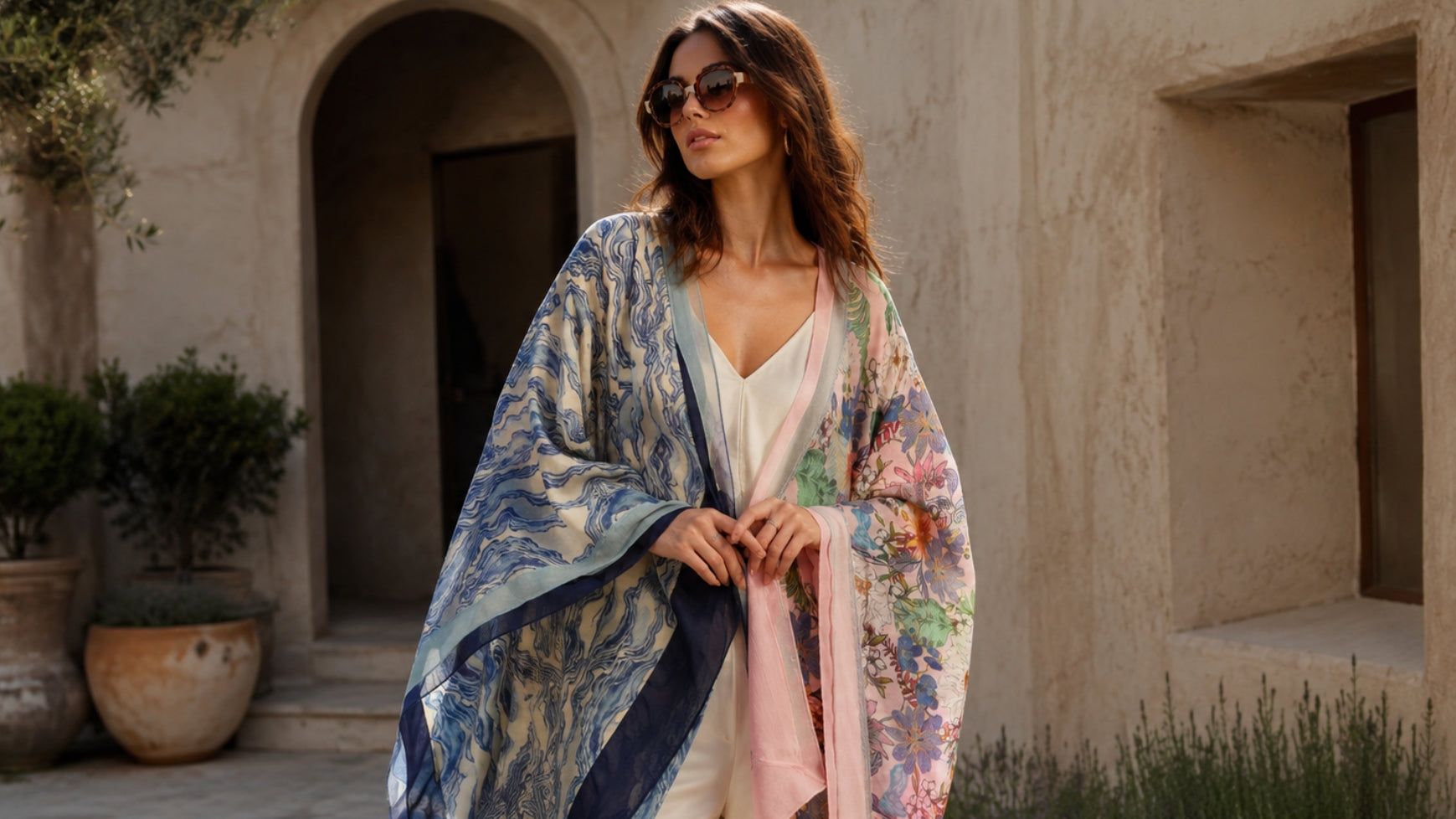
The linen and modal scarves in the Maneesha Ruia collection are built for exactly this sustained versatility, light enough to fold into a compact travel bag, refined enough to wear directly from the airport to a dinner reservation without any intermediate stop.

Matching the Style to the Occasion
Understanding how to wear a scarf as a woman across every context of daily and social life comes down to reading the occasion and selecting the configuration that serves the overall look rather than competing with it.
At work, the professional fold or European loop over tailored separates establishes polish and warmth without disrupting formality. On weekends, the classic drape or long drape over well-fitted jeans and a cashmere knit produces the kind of effortless finish that takes years to discover intuitively and seconds to execute deliberately. For evening occasions, the shawl wrap or belted configuration transforms a simple silhouette into one that is genuinely complete.
The scarf, used with intention, does not draw attention to itself. It resolves the look.
Choosing the Right Material
The way a scarf behaves in each of the above configurations is largely determined by its fiber. Cashmere holds the European loop and professional fold with quiet authority. Silk is the natural choice for neck ties, hair wraps, and bag accents across all seasons. Pure pashmina, the finest grade of cashmere, carries the shawl and belted wrap with a weightlessness that heavier materials cannot offer. Wool-silk blends provide the structure needed for the long drape and belted wrap in cooler months. Linen and modal breathe well in warmth and maintain their shape over long wear, making them the practical choice for travel.
The full scarves and wraps collection at Maneesha Ruia covers each of these fibers across a range of occasions, weights, and finishes. Every piece is handcrafted from GOTS-certified natural fibers using AZO-free dyes, designed not for a single season but for a wardrobe that builds and deepens over time. Find the piece that speaks to you, and begin wearing it in every way it deserves.