Cashmere vs. Silk vs. Wool-Silk Scarf: Which Fits Your Fall/Winter 2026 Wardrobe?


Fall dressing asks for a certain flexibility. As cool mornings give way to milder afternoons and evenings turn colder, the layers you choose need to move with the season. A scarf can be part of that transition, bringing warmth when you need it, texture when you want it, and a change of character to an otherwise familiar ensemble.
The fabric of the scarf, then, makes a big difference. Cashmere brings the most warmth and softness. Wool-silk offers warmth with a lighter feel, making it ideal for in-between weather. Silk is less about warmth and more about styling, bringing print, color, and embellishment without adding bulk.
When you're choosing between the three, what’s worth considering is both the level of warmth the fabric offers and the weather and occasion you're dressing for.
Cashmere vs. Wool-Silk vs. Silk: The Short Answer
Each fabric brings something different to a fall/winter wardrobe.
|
Fabric |
Best for |
What it brings to your wardrobe |
|
Cashmere |
Colder days and winter layering |
Softness, warmth and a cozy, fluid drape |
|
Wool-Silk |
Transitional weather dressing and layering |
Warmth with lightness, texture, and movement |
|
Silk |
Styling and occasion dressing |
Luminosity, fluidity, and expressive detail |
Cashmere Scarves: When Warmth Doesn’t Mean Weight
Cashmere earns its place in a fall and winter wardrobe for a simple reason: it can provide considerable warmth without the heaviness associated with bulkier winter layers.
Its fine fibers create a soft, fluid fabric that sits comfortably around the neck or across the shoulders. That makes cashmere particularly well suited to coats, tailoring and knitwear, where another heavy layer can quickly become too much.
It's also one of those fabrics that can move between settings without looking out of place. A cashmere scarf can be the practical layer you reach for on a cold morning, then sit just as naturally over an evening outfit later in the day.
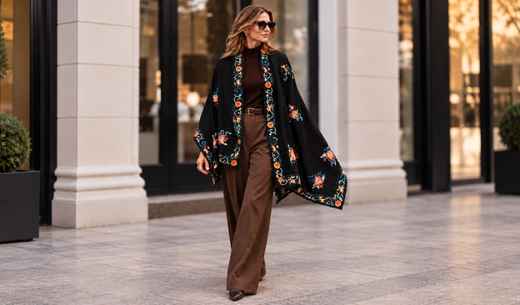
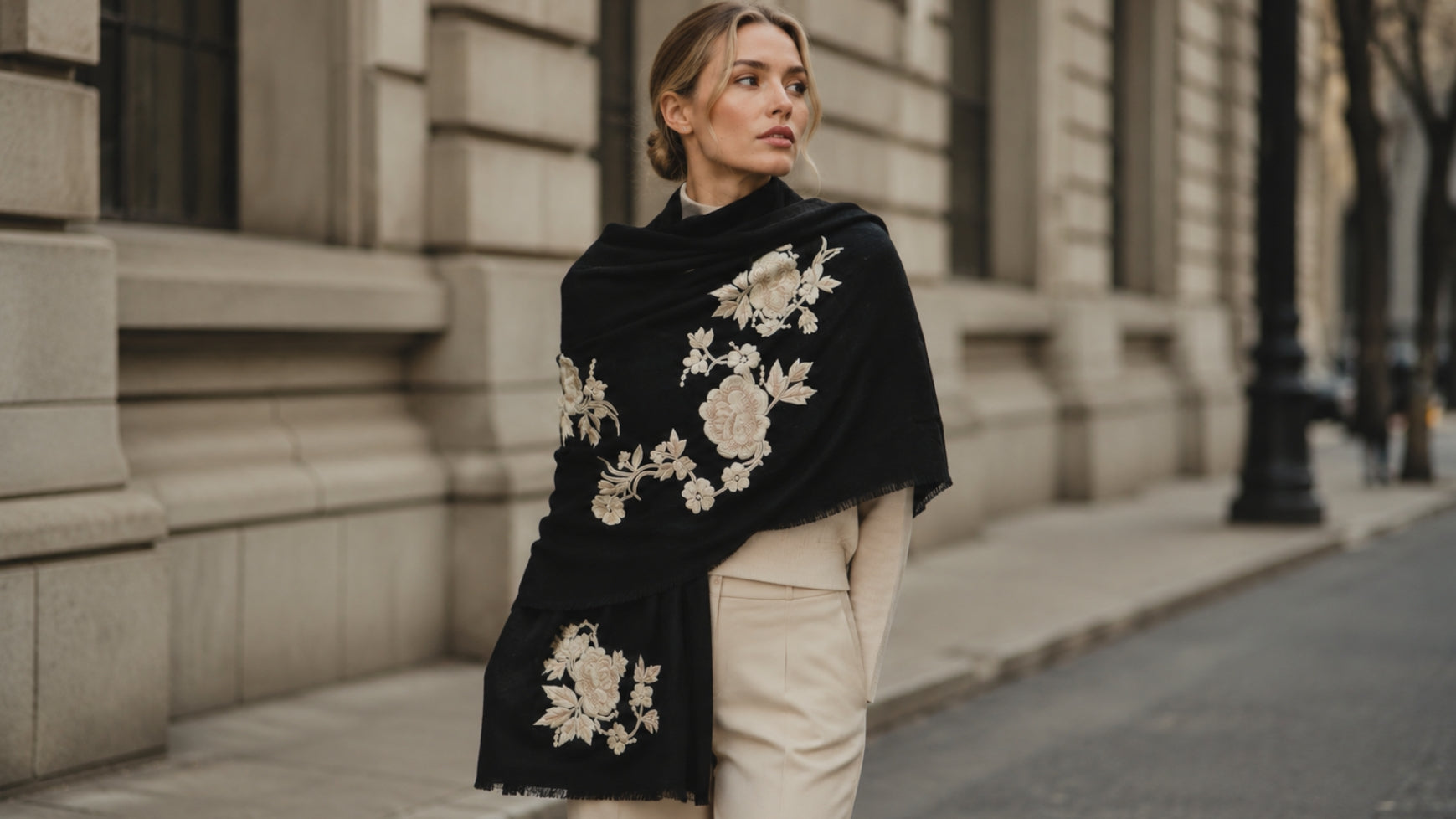
At Maneesha Ruia, the Cashmere collection is crafted from Grade A cashmere known for its softness, warmth, longevity, and drape. The collection also pairs the fabric with intricate lace and hand-embroidery, creating a contrast.
If you're comparing cashmere with other materials specifically for quality, sourcing and construction, our complete cashmere scarf buying guide goes deeper into what to look for.

Wool-Silk Scarves: The Fall-to-Winter Middle Ground
Wool-silk is perhaps the most appropriate fabric to consider when you want one piece to bridge the space between seasons rather than belong exclusively to winter.
Wool brings warmth and coziness, while silk brings lightness, softness, and luminosity. This makes wool-silk scarves particularly well-suited for transitional dressing.
A wool-silk scarf also has a particular visual quality. You can wear it loosely over a jacket, wrap it around the neck or let it fall across the shoulders over evening wear.
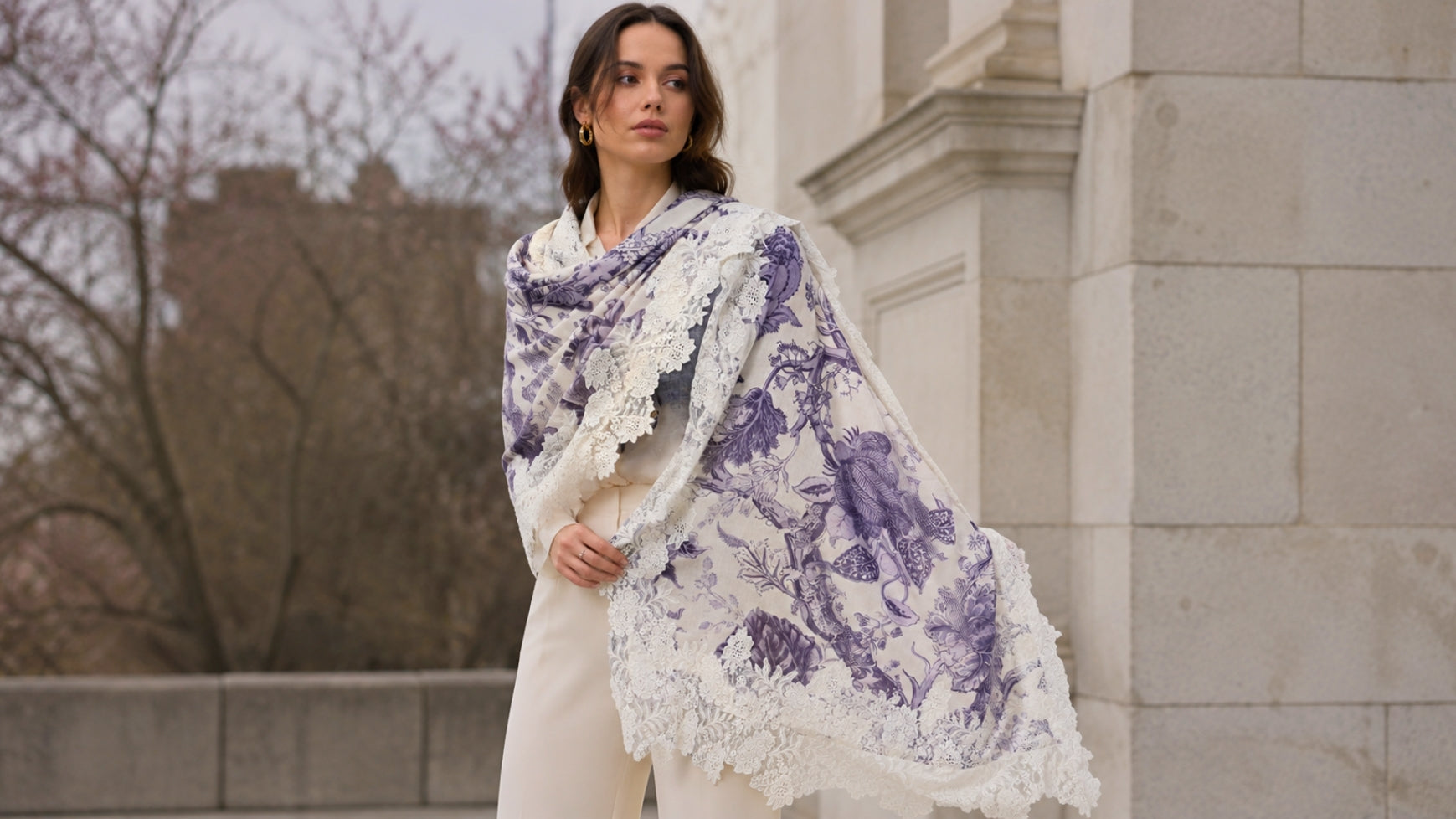
At Maneesha Ruia, wool-silk also offers an opportunity to reinterpret print and lace in a way that feels distinctly contemporary. Printed designs are finished with intricate floral lace detailing, bringing together the fluidity of the fabric with a craft technique that has become a signature of the house. Cleta Leopard Print pairs a bold animal print with tonal lace, while the Multi-Colored Jacobean Print takes a softer, more intricate approach.

Silk Scarves: When the Scarf Becomes Part of the Look
Silk doesn't compete with cashmere or wool-silk on warmth. Its strength is elsewhere: color, movement, print, luminosity and the ability to change the character of an outfit without adding much weight.
That's particularly relevant this fall/winter 2026, when silk scarves have returned to fashion conversation as one of the season's notable accessories.
You can wear it with a tailored blazer, over a fine knit, beneath a coat or tied at the neck with an evening dress. When the rest of your outfit is built around strong, simple pieces, a silk scarf can provide the detail that changes the entire impression.
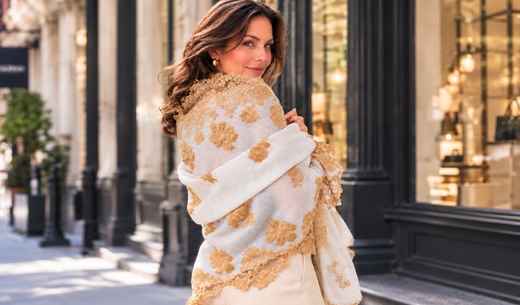
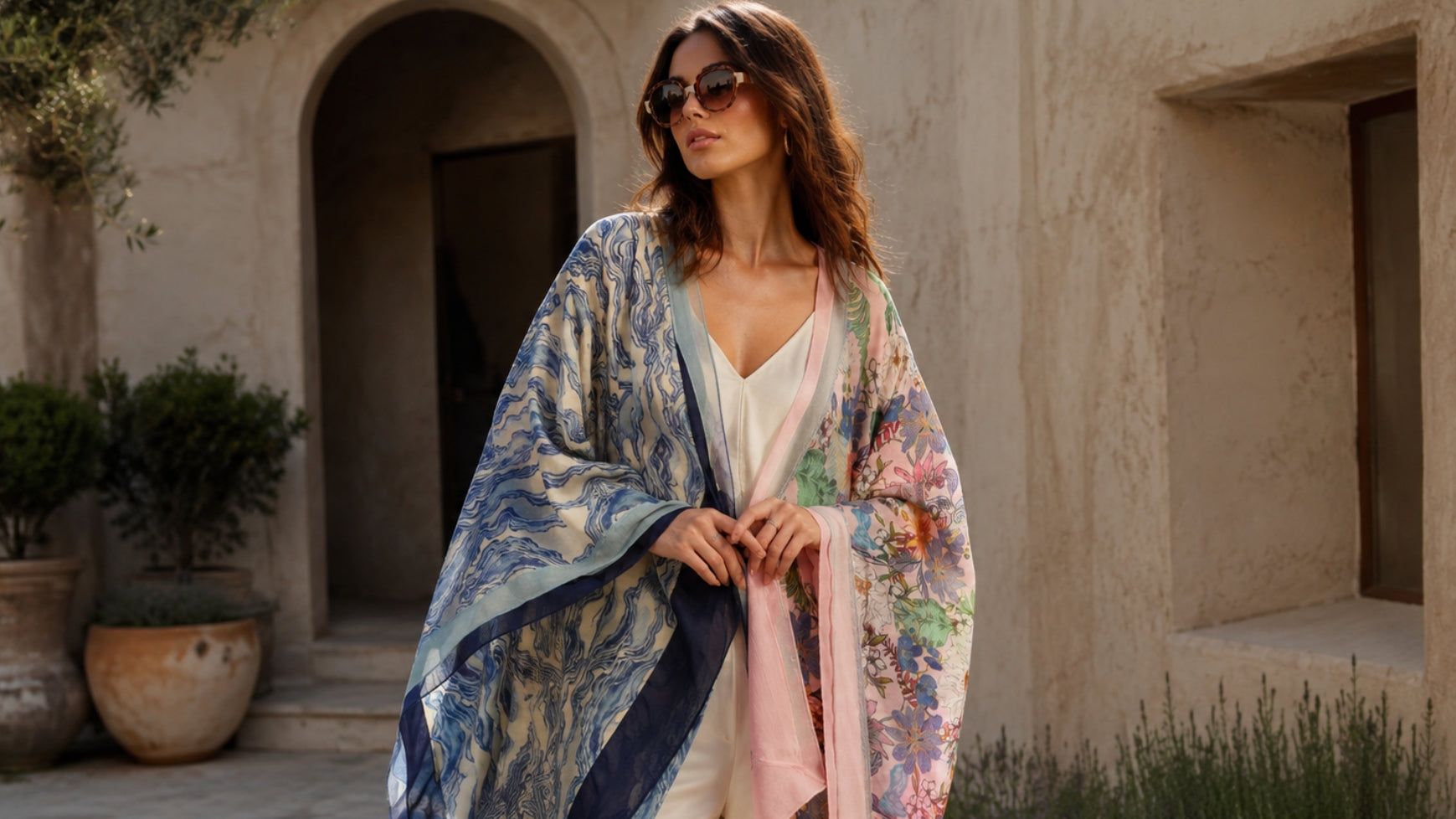
Explore 100% silk square scarves in printed styles and pieces adorned with lace and Swarovski crystals. The contrast is part of the appeal: silk's fluid surface gives delicate embellishment room to catch the light and become part of the composition.
If you're interested in exploring different ways to wear one, see our guide to how to style a silk scarf.

The Fabric Is Only the Beginning
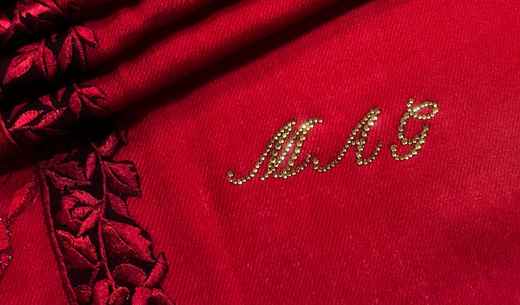
At Maneesha Ruia, craftsmanship extends beyond the choice of material. The collections bring together techniques and finishes including lace, embroidery, appliqué, beadwork and other hand-finished details. The result is that the fabric isn't simply functional. It becomes part of the character of the piece.
That's worth considering when you're buying a scarf you'll keep for years.
Building a Fall/Winter Scarf Wardrobe
You don't necessarily need one fabric to do everything.
A well-considered scarf wardrobe can have different roles.
A cashmere scarf for winter and occasion dressing. A wool-silk scarf for the long stretch between early fall and winter. A silk scarf for the days when your outfit needs color, movement or a little more personality.

FAQs
Is cashmere warmer than wool-silk?
Cashmere is known for providing substantial warmth while remaining lightweight. Wool-silk blends can also provide warmth, but their lighter construction makes them particularly useful for transitional weather. The actual warmth of any scarf will also depend on its weight and construction.
Is wool-silk good for fall?
Yes. Wool-silk is particularly well suited to fall because it combines wool's insulating qualities with silk's lighter feel. It's a useful choice when temperatures fluctuate throughout the day.
Can you wear a silk scarf in fall and winter?
Absolutely. Silk isn't primarily a winter warmth layer, but it can be an effective fall and winter accessory when worn with coats, blazers, knitwear and dresses. Its strength is in adding color, pattern, texture and movement rather than insulation.
Is cashmere or wool-silk better for winter?
It depends on how you dress and how much warmth you need. Cashmere is a natural choice for colder conditions and winter layering, while wool-silk can be more useful when you want warmth without a heavier feel.
What is the best scarf material for fall?
There's no single best material. Cashmere works well when warmth is the priority, wool-silk is particularly suited to transitional temperatures, and silk works when you're looking for a lighter accessory that adds color, pattern or polish.