The Elegant Scarf: A Timeless Investment Piece for Women Over 50


There is a point in most women's relationship with fashion for women over 50 where the goal changes, from buying more to buying better. The trend cycles that once felt exciting start to feel done, and the appeal shifts toward pieces that do not need replacing every season. An elegant scarf is one of the clearest examples of that shift, a single well-made thing that outlasts the trend cycle entirely.
What Makes a Scarf Genuinely Elegant
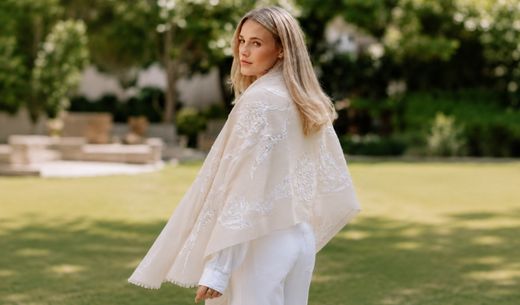
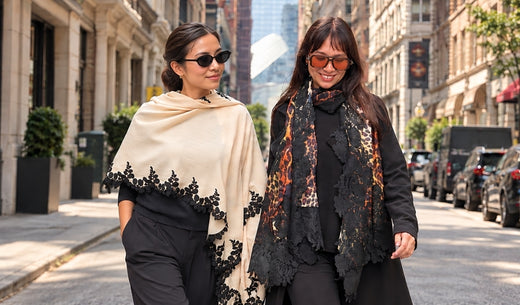
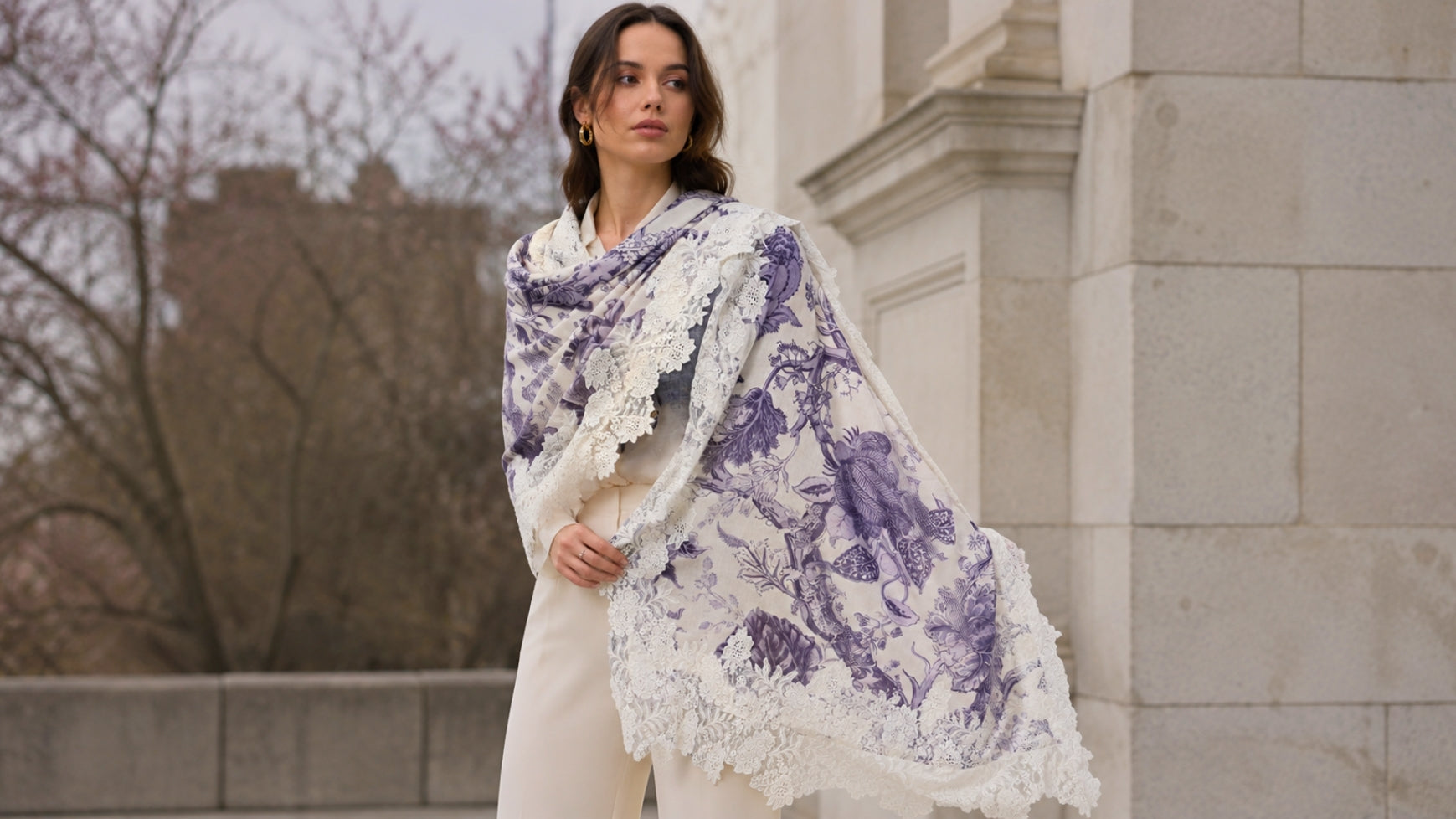
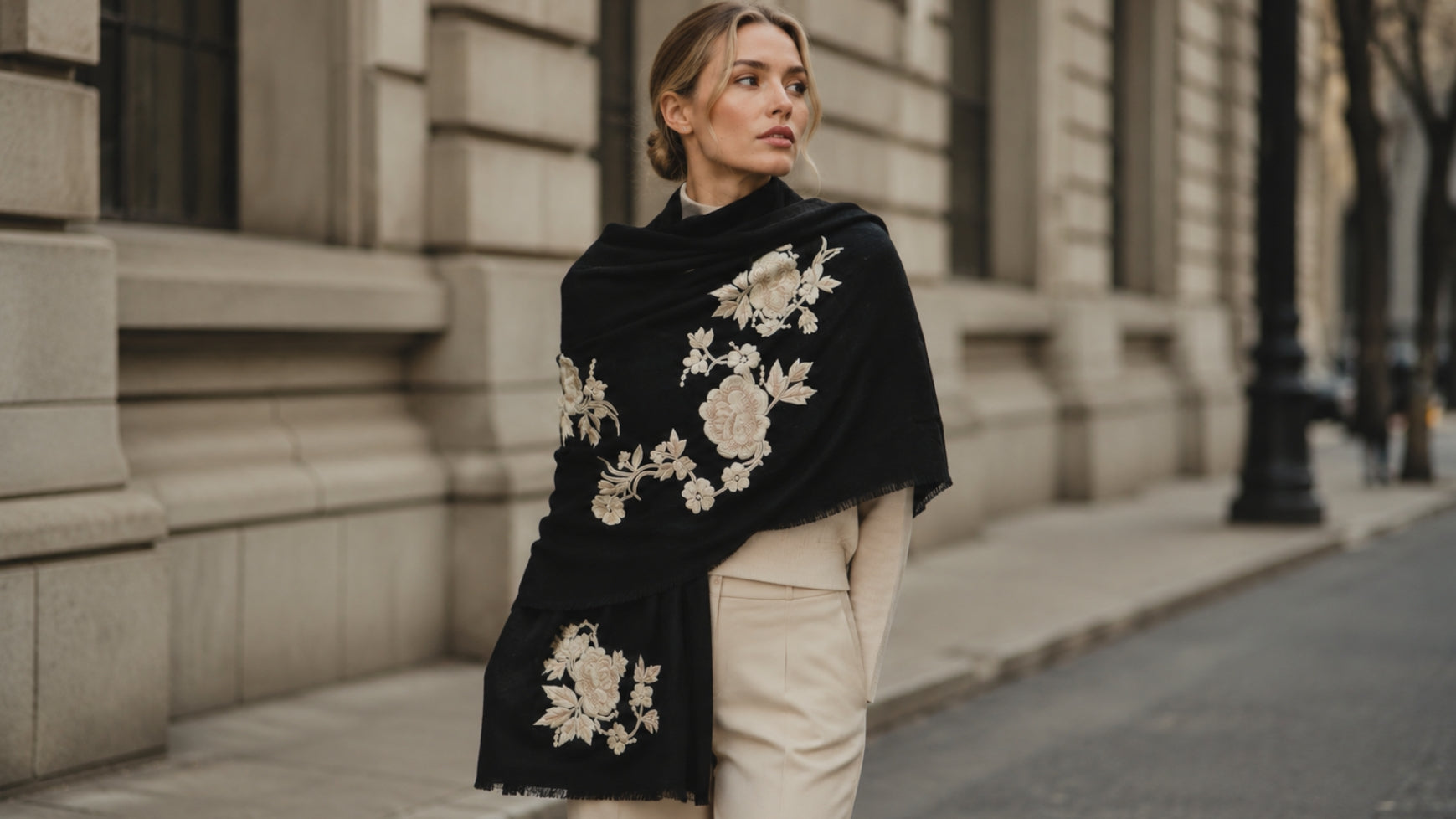
Elegance in a scarf has very little to do with how loud it is. The pieces that read as truly elegant tend to share a few traits. Fabric with real weight and drape, not a thin, stiff stand-in. Detail that rewards a closer look, hand-cut lace, embroidery, rather than an obvious logo or print. And a palette built to work with a wardrobe instead of shouting over it. An elegant silk scarf earns the word through how it moves and falls, not through how much attention it demands.

Craftsmanship That Justifies the Investment
A genuinely elegant scarf is usually the work of several different hands, one artisan dyeing, another hand-painting or embroidering, another finishing the lace border. That process often runs to two weeks per scarf, and it is what separates a timeless accessory from something that only looks similar in a photograph. The difference shows up right where it counts: the drape, the way a lace border sits, how the color ages. None of it survives mass production.

Statement Versus Understated Elegance
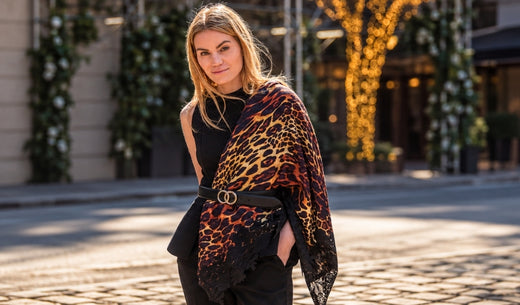
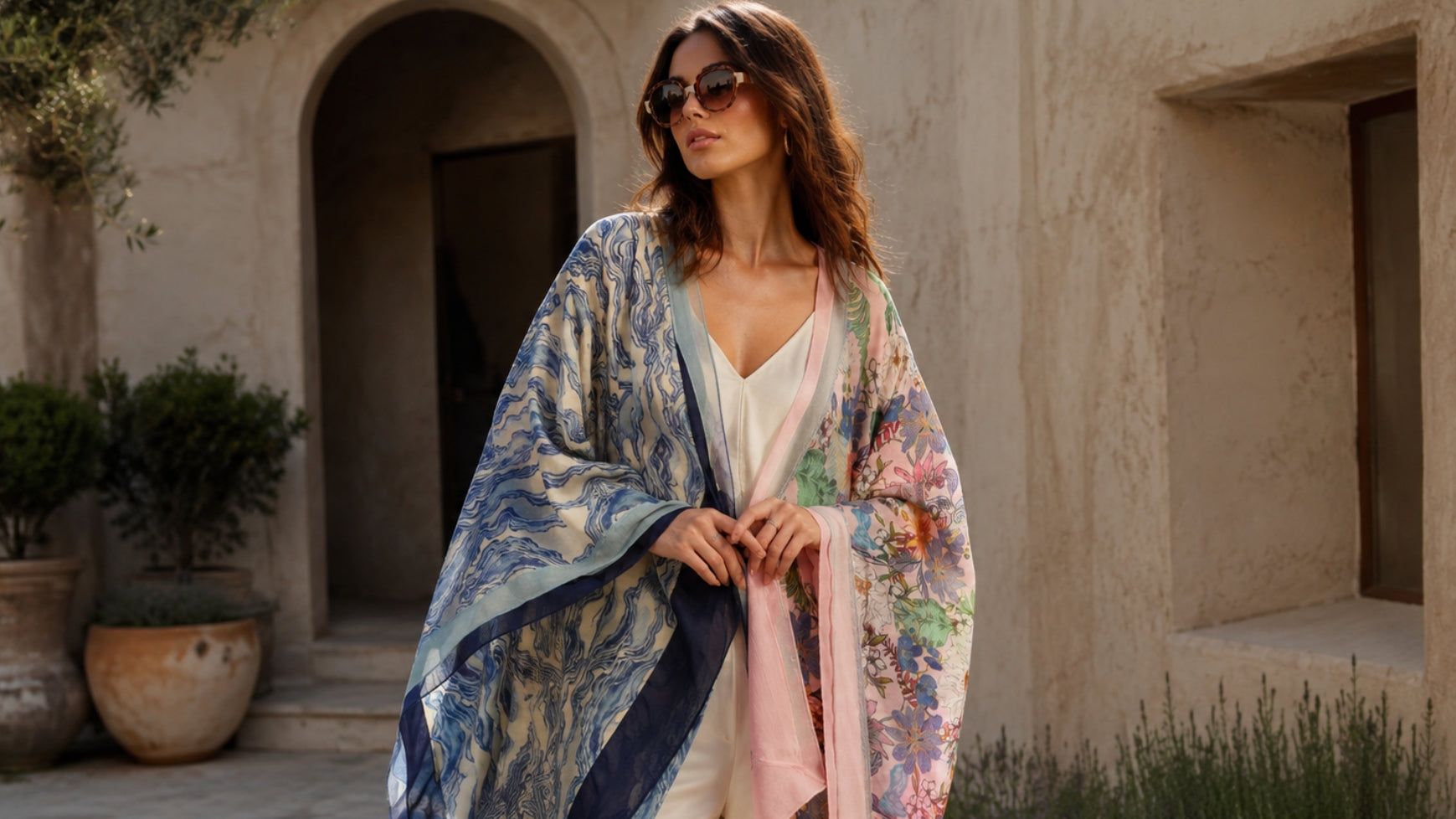
Not every elegant scarf has to whisper. A statement scarf in a bold color, or with more elaborate embellishment, can be every bit as timeless as a neutral, as long as the craftsmanship behind it holds up the same way. It is considered against disposable.
A Few Places to Start
For an everyday elegant scarf, the silk scarves collection has the lightness and drape that define the category. For something with more warmth and presence, the cashmere and pure pashmina scarves bring the same investment-grade construction in a heavier hand. And for a scarf chosen as a milestone or a self-gift, the Luxe Gifts collection is built around exactly that kind of deliberate purchase.
How to Recognize Quality Before You Buy
A few concrete signs separate a genuinely well-made scarf from one that only photographs well. Hold the fabric up to the light; fine silk shows an even, consistent weave with no thin patches. Look closely at the hem and any lace border; hand-finished edges carry small, deliberate irregularities, while machine-finished ones are uniform in a way that reads flatter and less considered. And weigh it in your hands. A cashmere or pashmina piece with real fiber quality has a heft and softness a lower-grade blend cannot fake, however close it looks in a photo.
Building a Small Collection Rather Than One Piece
Once that first elegant scarf earns a place in regular rotation, most women find themselves adding a second and a third, not out of excess, but because different occasions call for different weights and tones. A collection built this way, slowly and with intention, ends up far more useful than one assembled in a rush around a single trend. Two or three pieces in complementary but distinct tones, one lighter silk, one warmer cashmere, one with a little more embellishment for evenings, cover a full year without ever feeling repetitive.
Caring for an Investment-Grade Scarf
The craftsmanship that makes a scarf worth the investment also means it asks for real care in return. Dry cleaning only. No direct ironing over embroidery or lace. Storage folded flat, somewhere cool and dry and out of direct sun. Those are the basics that protect both the fabric and the handwork across years of wear, and a piece looked after this way tends to only improve with age, settling into a softness and drape a newer scarf has not earned yet.
When to Invest and When to Wait
Not every scarf needs to be an investment-grade one, and part of building a genuinely elegant collection is knowing which is which. A scarf you will wear constantly, in a neutral that anchors most of your wardrobe, is worth the higher price simply for how often it earns that cost back. A scarf bought for one specific event, or a passing color you are briefly taken with, does not carry the same argument. Treat every purchase as an investment and you end up with a closet full of expensive pieces that do not get worn any more than the cheaper ones they replaced.
Here is a useful test before you buy. Picture the piece five years from now, in an outfit that does not exist yet. If that is easy to imagine, it is very likely a real investment. If the only setting that comes to mind is one specific dress or one specific season, it is probably a smaller, lower-stakes buy, still worth owning, just not worth stretching the budget for.
Frequently Asked Questions
What separates an elegant scarf from a trendy one?
Craftsmanship and versatility. An elegant scarf is chosen for how it drapes, how the color and detailing hold up over years, and how well it works across multiple outfits, rather than for a single season's print or color.
Is a more expensive scarf actually worth the investment?
Often, when measured by cost per wear rather than upfront price. A well-made scarf worn regularly for years typically costs less per use than several inexpensive pieces replaced every season.
Can a statement scarf still be considered timeless?
Yes. A bold color or more elaborate embellishment doesn't disqualify a piece from being timeless, as long as the construction and craftsmanship are built to last rather than to chase a single trend.
What fabric makes the most elegant scarf?
Silk and cashmere are the two most reliable choices for elegance, silk for its natural drape and light, easy movement, cashmere for its warmth and richer visual weight.
How many elegant scarves does someone actually need?
A small, well-chosen set, typically two or three in different weights and finishes, tends to serve better than a large collection of less considered pieces.