Layering for Winter: Staying Warm and Cozy in Wool-Silk and Cashmere Scarves


Winter layering has a tendency to become additive. One piece over another, then another, until staying warm comes at the expense of a crowded silhouette.
A scarf can change that equation. It adds warmth where you need it while giving the rest of the outfit room to breathe. The difference lies in the fabric, the proportions and, at Maneesha Ruia, the details that finish the piece.
Wool-silk offers a fluid drape while cashmere feels softer and more enveloping against the skin. Lace borders, embellished ends and hand-embroidered details then change how each scarf can be worn.
Wool-Silk and Cashmere: Two Different Kinds of Winter Warmth
Wool-silk and cashmere occupy different places in a winter scarf wardrobe.
A wool-silk scarf holds a beautiful drape while retaining the softness and fluid movement of silk. It works especially well when you want lightweight warmth, making it a natural choice across the changing temperatures of fall and winter.
Cashmere has a softer, more enveloping quality. It settles cozily around the neck and shoulders, creating a warm, close wrap that offers a cozy, cloud-like embrace while remaining plush. That distinction matters when you're deciding how to drape the scarf.
How to Layer a Scarf for Winter
1. The Close Wrap
When the temperature drops, a close wrap is the most instinctive way to wear a winter scarf.
Fold the scarf lengthwise and wrap it once or twice around the neck, depending on its length. Tuck the ends loosely underneath or let them fall just below the collarbone.
Cashmere is particularly comfortable in this kind of drape because of its soft, supple feel.With a wool-silk scarf, a single relaxed wrap lets the fabric retain more of its movement.
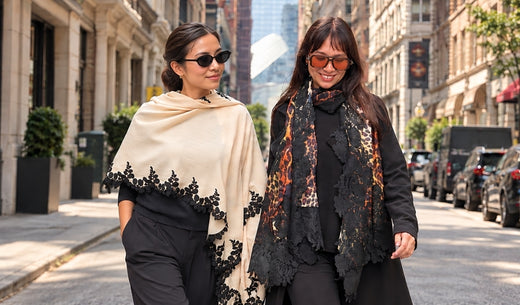
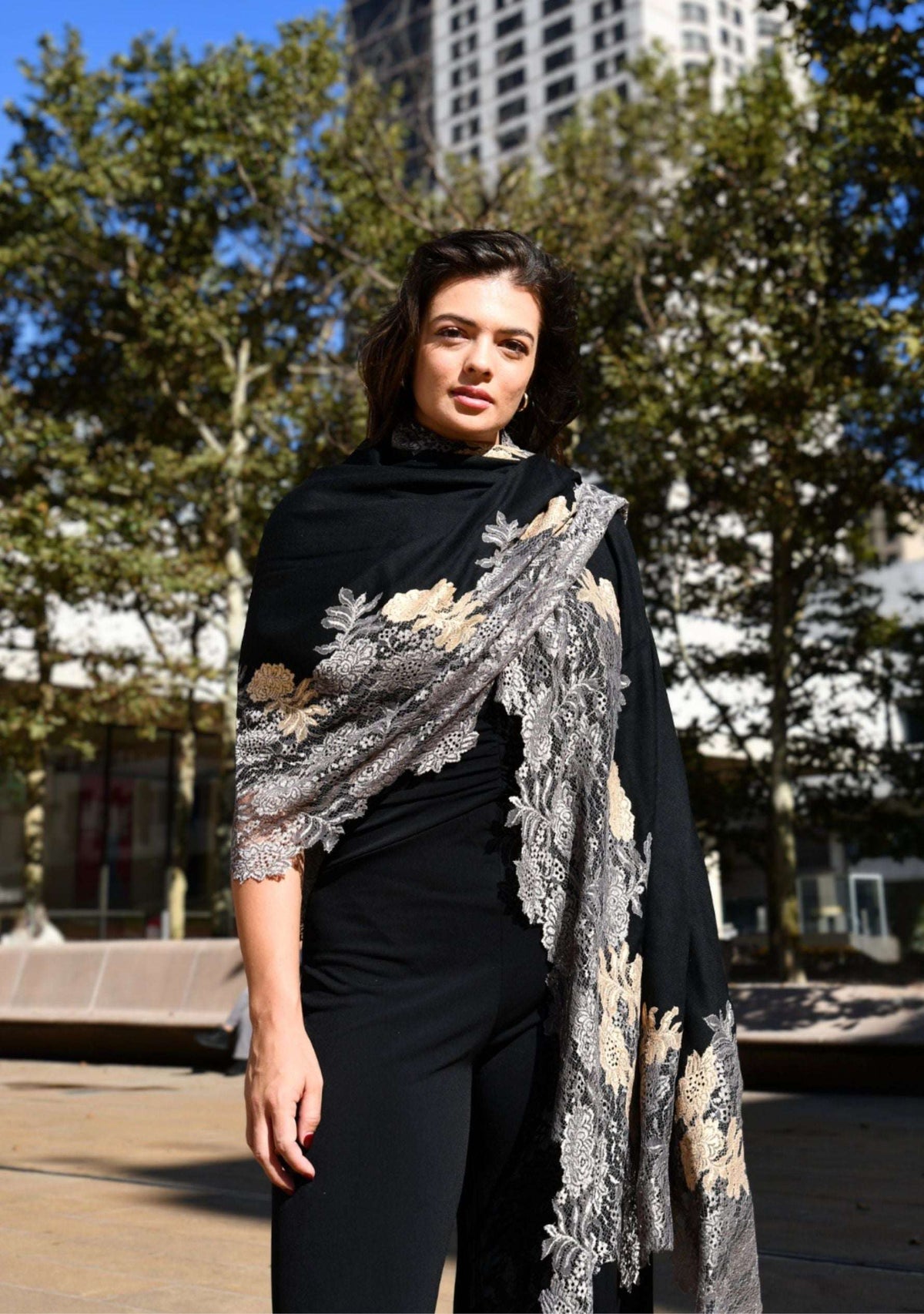
This is also where the detail at the ends can become part of the styling. With Victoria, for instance, the Chantilly lace extends inward from both ends of the cashmere scarf. If the ends are left visible rather than buried inside the wrap, the lace becomes part of the way the scarf is worn.
2. The Long Drape
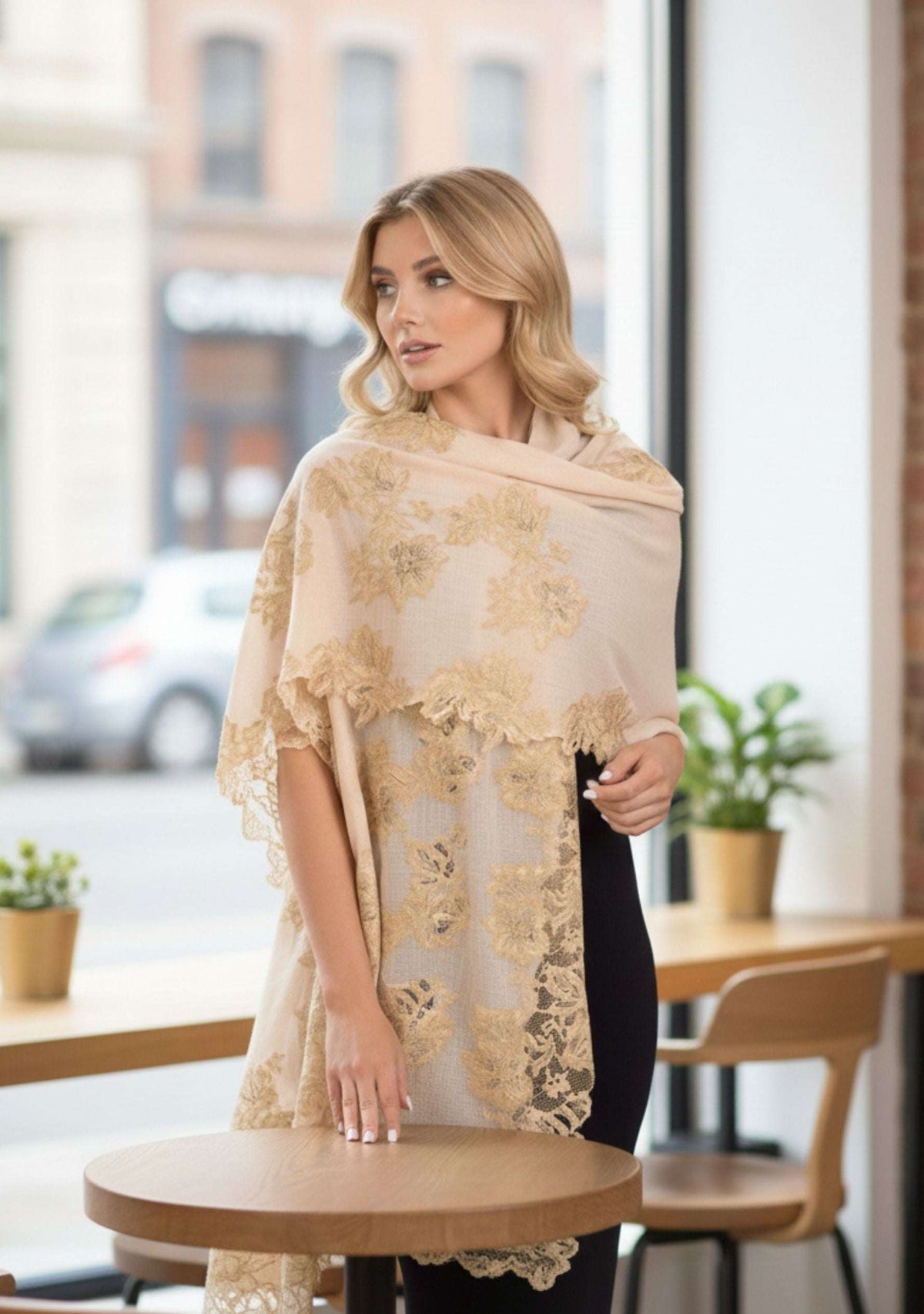
Sometimes the most effective approach to wear a winter scarf is to leave it largely untouched.
Fold the scarf lengthwise and place it around the back of your neck, allowing both ends to fall straight down the front. You can leave them at equal lengths or carry one end slightly across the body for a softer asymmetry.
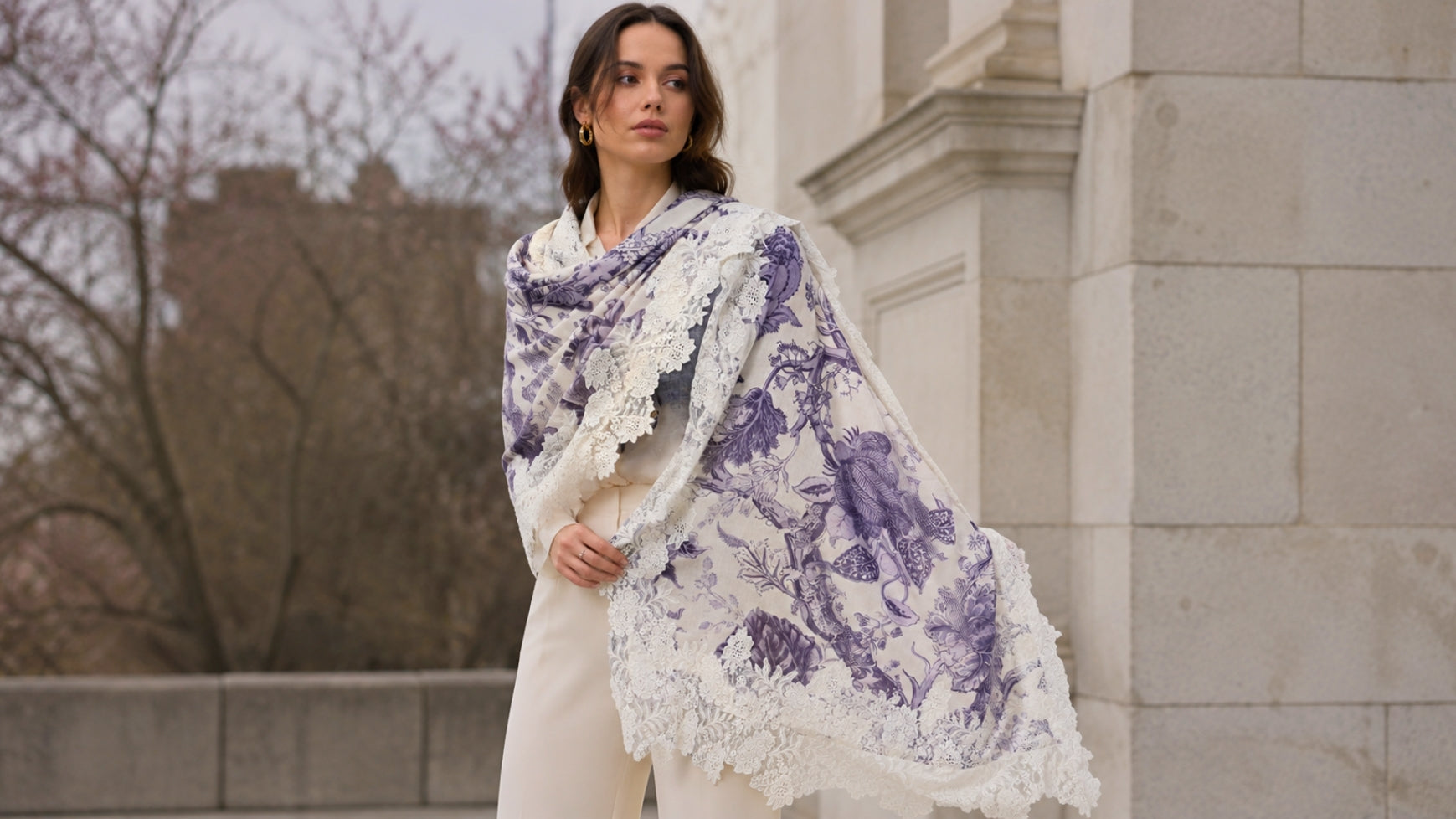
Clermont is well-suited for this kind of styling. Its wool-silk body is framed by a generous double-colored floral lace border, extending beyond the main scarf dimensions. Letting the scarf fall open keeps that border visible along the ends rather than breaking it up through repeated wrapping.
3. The Shoulder Drape
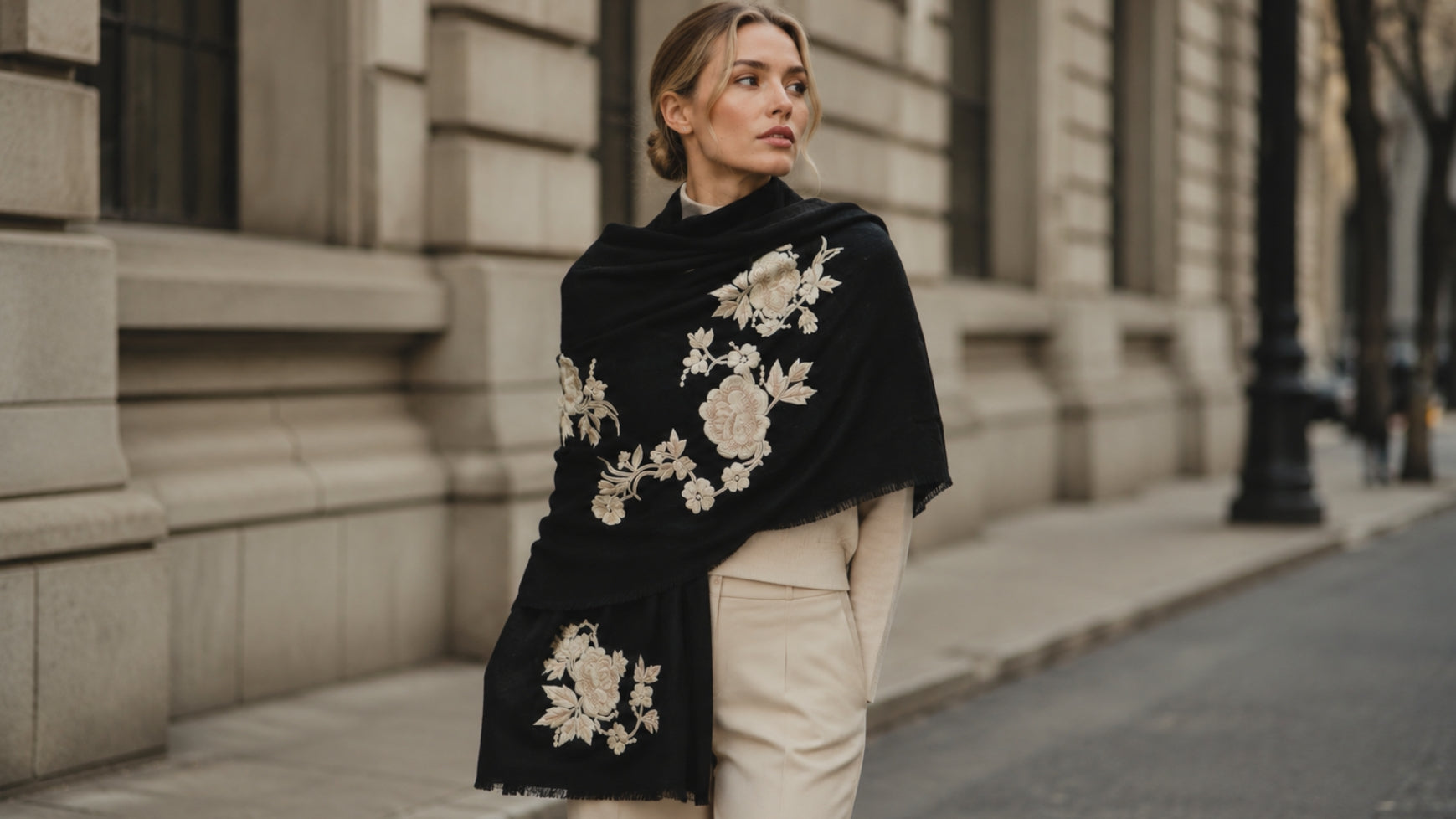
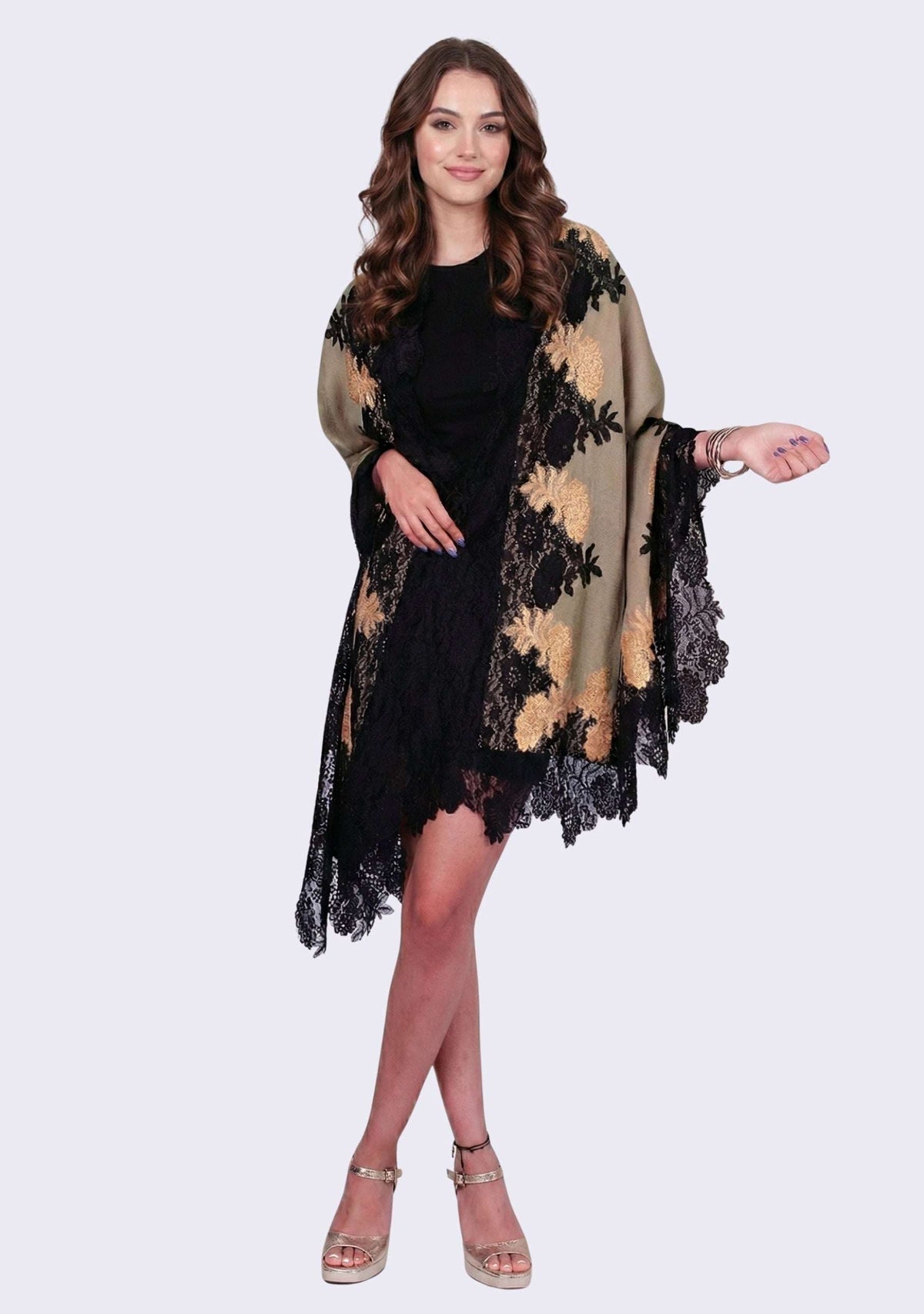
On evenings indoors, at dinner or when you're moving between heated and outdoor spaces, an open shoulder drape can feel more natural.
Grapevine Tres works naturally here. The wool-silk scarf is finished with a handcrafted triple-colored scalloped lace border in beige, natural and alabaster. Worn open across the shoulders, the scalloped edge follows the line of the body, giving the open drape its definition.
For an evening setting, the same approach can be used over a dress.

4. The One-Shoulder Drape
For a more asymmetric way to wear a winter scarf, bring it around the neck and carry one end over the opposite shoulder, allowing the other to fall freely at the front.
You can also gather both ends over one shoulder and secure them with a loose knot, creating a softer, off-center drape.
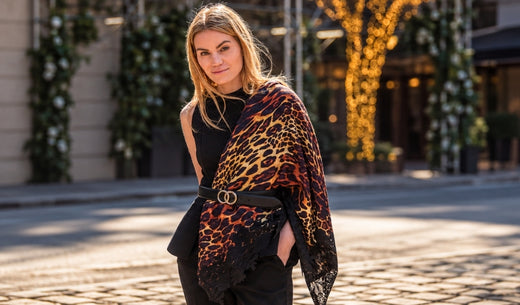
This way of wearing a scarf gives the fabric a little more movement while keeping it close enough to the body. A wool-silk scarf with lace borders such as Clermont can take on a different character in this style. Its generous border becomes part of the diagonal line, while the length of the scarf keeps the drape relaxed rather than tightly arranged.
FAQs
How do you layer a scarf in winter?
Start with a close-fitting base layer, then place the scarf according to the outerwear. You can tuck it beneath a coat for a cleaner silhouette, drape it over tailoring or wear it across the shoulders when you want the scarf to remain visible.
Is wool-silk warm enough for winter?
Wool-silk can be a useful winter layer, particularly when worn with knitwear and outerwear. Maneesha Ruia's wool-silk scarves use an 80% wool / 20% silk composition, giving them a soft, textured feel with enough structure for layering.
How do you wear a scarf under a winter coat without looking bulky?
Fold the scarf once rather than wrapping it repeatedly, and keep the fabric close to the neck. A coat with enough room through the collar and chest will also accommodate the scarf more comfortably.
Should a winter scarf match your coat?
It doesn't have to. A scarf can match the coat tonally for a refined look or introduce a contrasting print, color or texture. The important consideration is how the scarf relates to the rest of the outfit rather than whether it matches one specific piece.