How to Wear a Scarf with a Dress: A Complete Styling Guide


A dress is the most complete garment in a woman's wardrobe. It is, by design, a finished thought. It is a single piece that makes no demand on the wearer to coordinate separates, balance proportions between blouse and trouser, or navigate the gap between a jacket and a waistband. It resolves everything in one decision. And yet, for precisely this reason, it also presents the most interesting creative challenge: where does an accessory add to something already resolved?
A scarf, when chosen correctly and worn with understanding, adds something that even the most beautifully designed dress lacks on its own: texture, warmth where needed, movement, and the specific kind of personal authorship that comes from layering a considered second element over a first. Understanding how to wear a scarf with a dress is not simply an aesthetic exercise. It is a matter of understanding what each dress needs and what each scarf is capable of, and finding the precise meeting point between the two.
This guide covers six configurations that move across the full range of dress occasions, from a weekend in a cotton sundress to an evening in formal silk or chiffon. For each, the right fabric, the right method, and the right piece from the Maneesha Ruia collection are identified.
Understanding What Your Dress Needs
Before selecting a scarf, it is worth identifying what the dress itself leaves open. A strapless or off-shoulder dress in summer leaves the shoulders and upper chest exposed, and a scarf drape or shawl addresses warmth and coverage without disturbing the neckline. A high-necked or turtleneck dress has warmth and coverage already resolved, but may benefit from a scarf worn as a belt at the waist, introducing proportion and articulation to a silhouette that could otherwise read as uniform from shoulder to hem.
A printed dress presents a different consideration: adding a printed scarf requires enough restraint in one of the two prints for the combination to read as composed rather than competing. A plain dress, whether in a strong color or a neutral, is the more forgiving canvas, because any scarf added to it reads primarily against the single ground of the dress fabric.
Fabric matters in the dress as well as the scarf. A heavy dress in structured wool or brocade can accommodate a heavier shawl or a fine pashmina without imbalance. A lighter dress in chiffon, georgette, or fine cotton works best with silk or the finest grade of cashmere, where the weight of the added layer does not overwhelm the lightness of what is underneath.

Method 1: The Shoulder Shawl with a Formal Dress
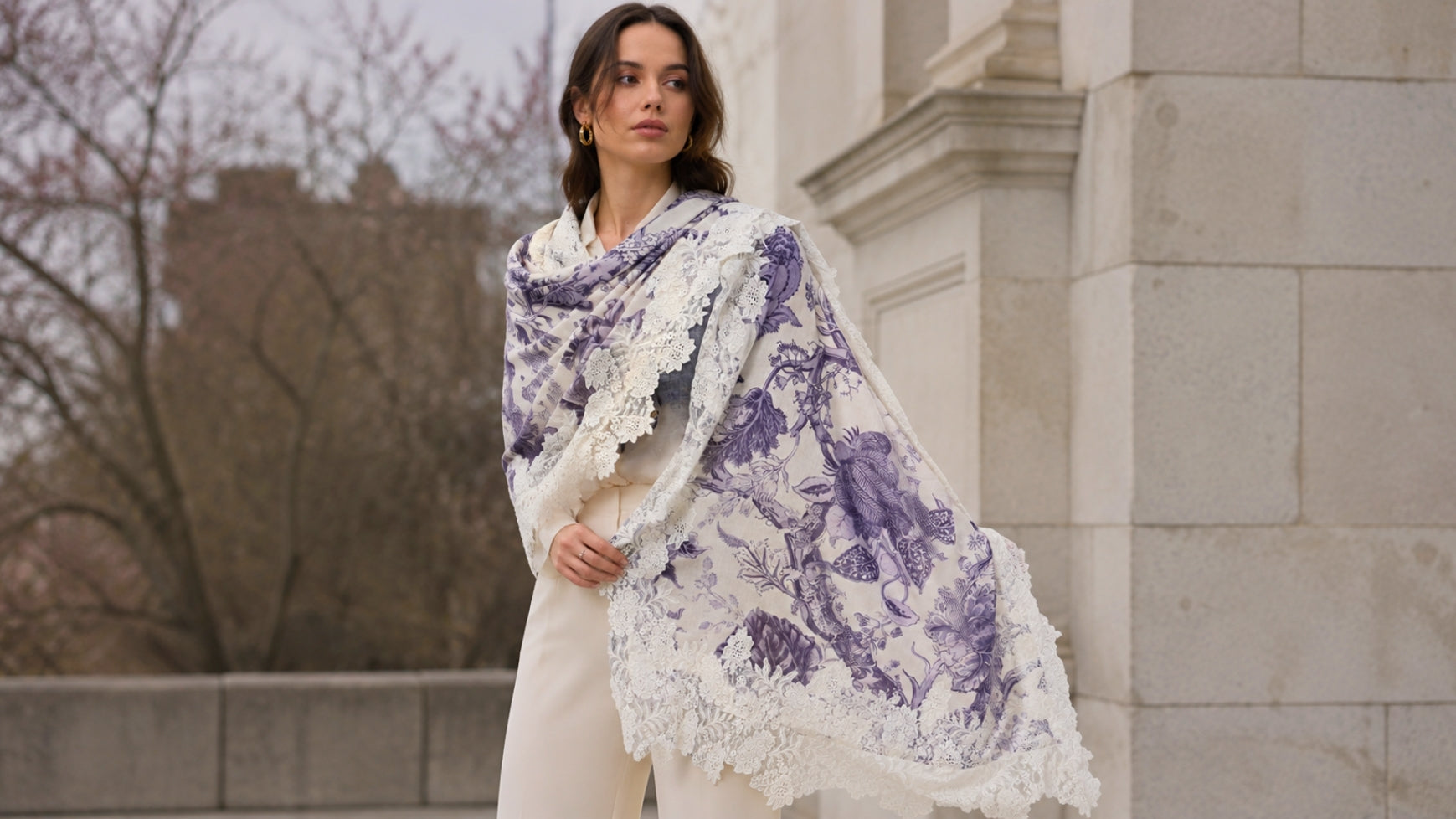
The shoulder shawl is the most direct answer to the question of how to wear a scarf with a formal dress, and it is the configuration that has been the standard for evening occasions since the middle of the twentieth century. It resolves every practical challenge a formal dress presents: warmth without a structured coat, coverage without concealment, and luxury without adding the weight of a second garment.
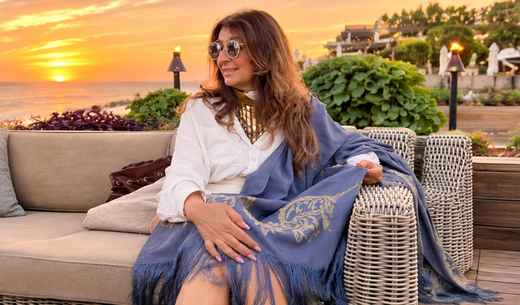
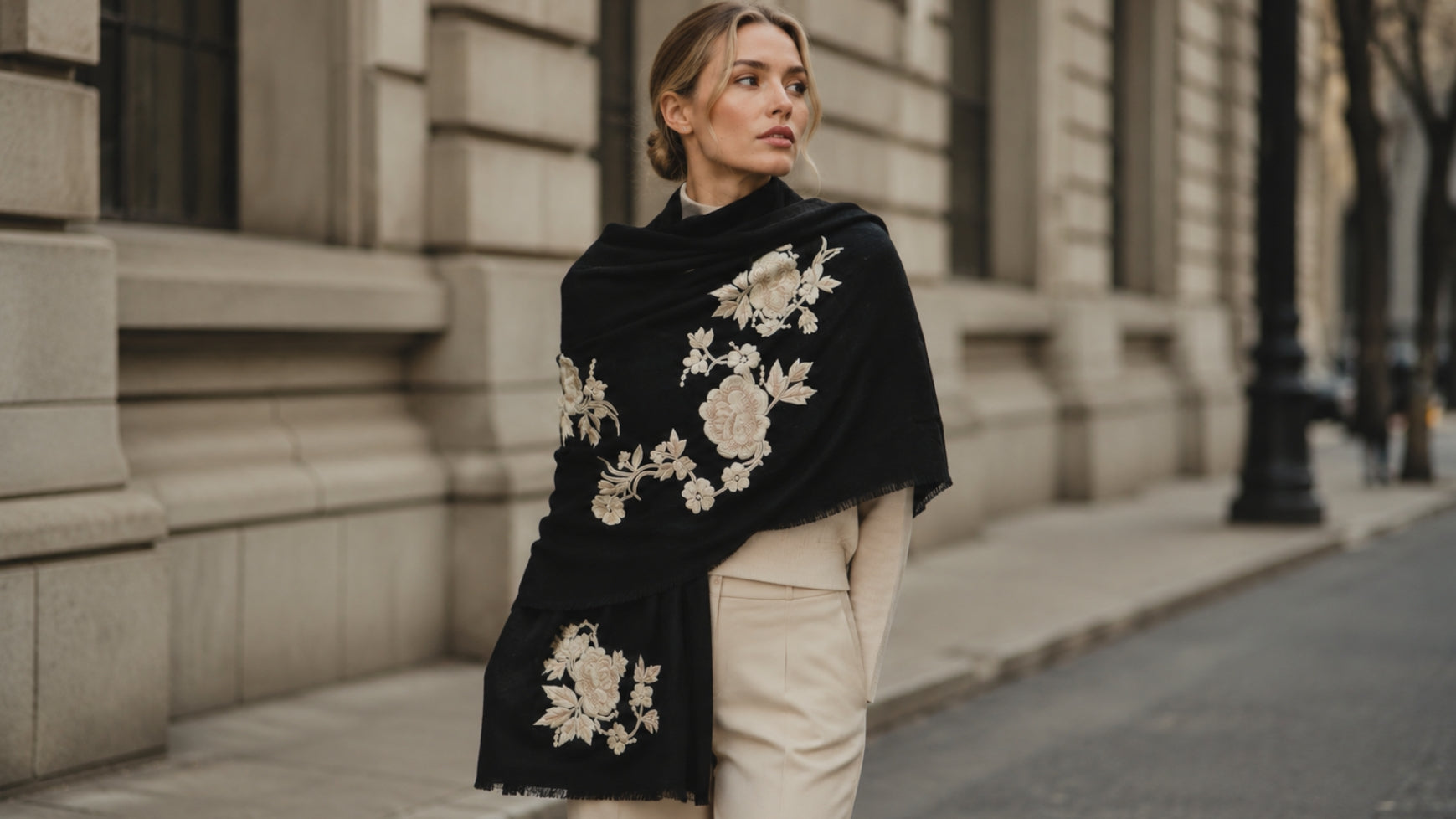
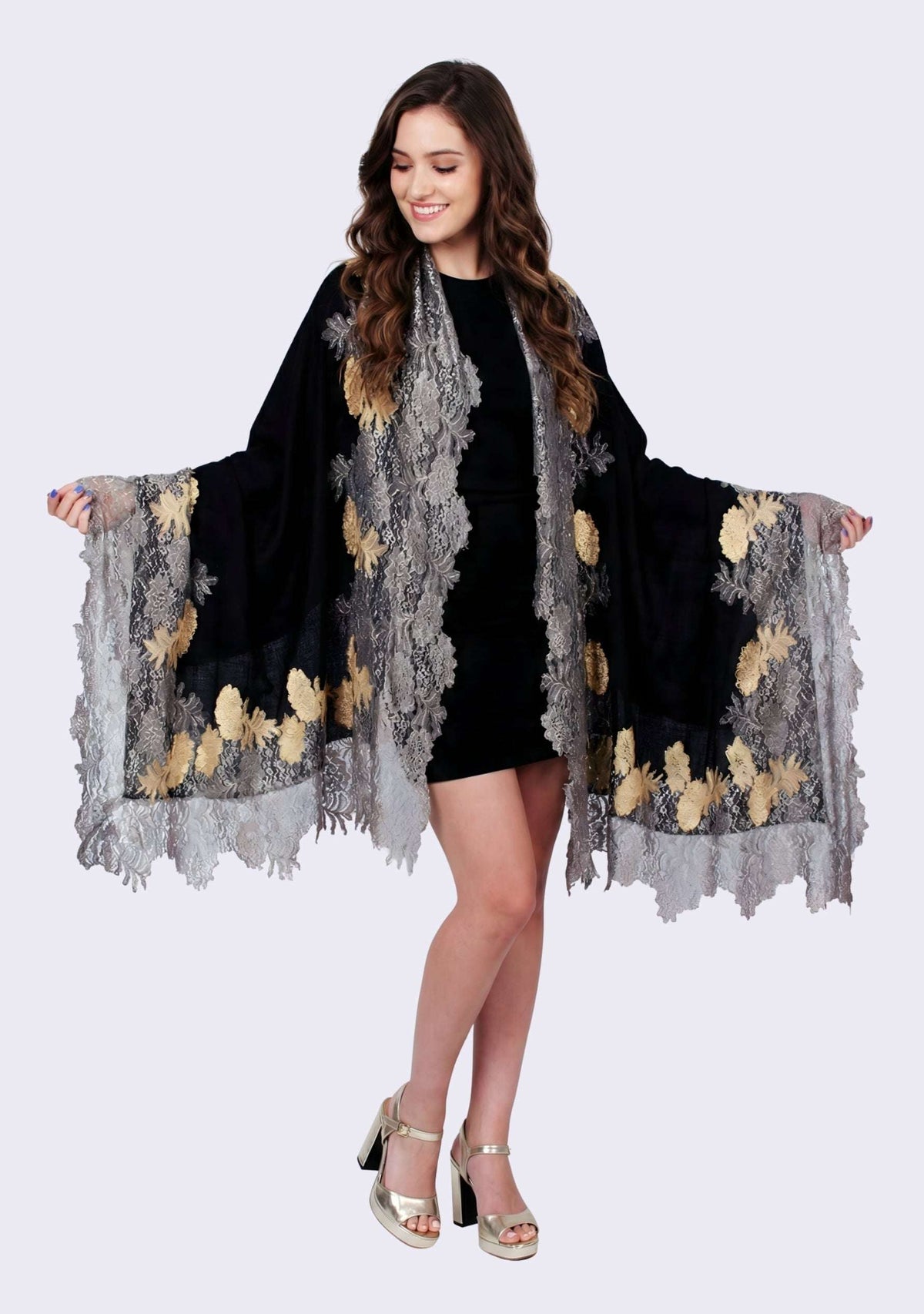
To wear a black scarf as a shoulder shawl over a formal dress, open the piece to its full length and drape it across both shoulders simultaneously, allowing both ends to fall forward over the chest. For an open-shouldered or strapless dress, bring the two front ends together at the center of the chest and carry each end under the opposite arm to the back, where they meet and can be loosely crossed. This holds the shawl through an entire evening without a pin or clasp.
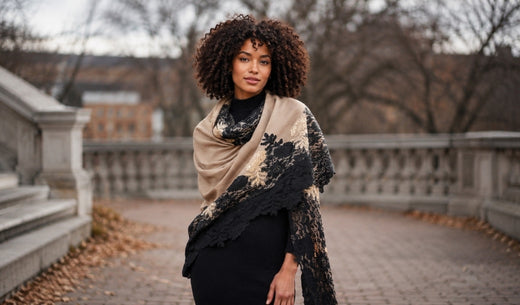
The fabric that performs best in this configuration is the finest cashmere or pure pashmina available. Its weight is sufficient to hold the position without slipping, but light enough that it does not disrupt the line of the dress beneath it. The Black Cashmere Pashmina Scarf with Black Ostrich Feathers and Sequin from the Maneesha Ruia pure pashmina collection is the definitive evening choice in this configuration. Its surface detail of hand-applied ostrich feathers and sequin embellishment against a ground of Grade A cashmere registers at the full scale the shawl method allows.

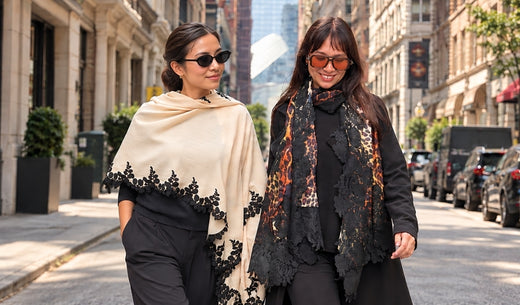
For a formal white, ivory, or blush dress, the equivalent in beige with beige feathers and sequin detail achieves the same formal authority in a lighter tonal register. These are pieces that do not simply accompany a formal dress. They complete it.
Method 2: The Silk Neck Tie with a Sundress
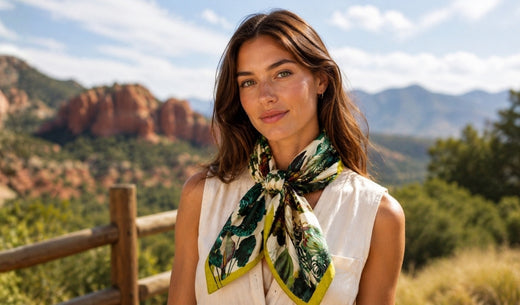
The sundress is, in most wardrobes, the most fully resolved of casual garments: lightweight, easy, typically in a print or a confident color, and designed to require nothing over it. Adding a scarf to a sundress is therefore an act of deliberate choice rather than practical necessity, and it should read as one. The configuration that achieves this most successfully is the silk necktie.
Take a silk square scarf (the Vagabonde collection squares from Maneesha Ruia are perfect at 40 by 40 inches) and fold it into a narrow band. Tie it loosely at the throat, with a simple knot rather than a bow, allowing the ends to trail at uneven lengths. Over a sundress in a plain color, this introduces a print at the neck that reads as considered and deliberate. Over a plain-colored sundress, the scarf provides the entire visual interest of the outfit.
As a summer scarf worn this way, the Cockatoo Printed Silk Scarf or Toucan Print from the Vagabonde collection brings the kind of bold, nature-inspired artistry that reads at its best in strong natural light. The weight of silk in this format is entirely unobtrusive. It sits at the neck without pressure, moves freely in a breeze, and adds nothing to the warmth of the outfit, making it the correct choice for warm-weather dressing where additional layers would be unwelcome.

Method 3: The Belted Scarf with a Plain Dress
The belted scarf is the most structural of all the configurations that address how to wear a scarf with a dress, and it works most effectively on a plain dress where the scarf itself is doing the work of introducing proportion, color, and visual interest. Drape the scarf across both shoulders as you would for a shoulder shawl, then add a slim belt at the natural waist over both the dress and the scarf simultaneously.
The result is a gathered, voluminous fall of fabric above the belt and a clean, structured silhouette below it. The contrast between the softness of the gathered scarf and the definition of the belt creates a composition that reads as fully considered and requires nothing else: no further layering, no additional jewelry, no additional decision to be made. The scarf color is the accent; the belt is the structure; the dress provides the canvas.
This configuration works best with the finer-weight cashmere and pashmina pieces in the Maneesha Ruia collection. The Soft Pink Superfine Cashmere Pashmina Scarf, belted over a simple cream or white dress, is a particularly strong example: the softness of the pink reads against the plain ground of the dress in a way that is both warm and feminine without being decorative in the way that a pattern or embellishment would be.

Method 4: The Printed Scarf as an Asymmetric Drape
For a dress worn to a cultural event such as an opening, a concert, or an exhibition, the asymmetric drape is the configuration that reads as most creatively considered. Begin with the scarf draped over one shoulder only, with the longer end trailing down the front of the body and the shorter end falling down the back. The asymmetry introduces movement and visual interest on one side of the body while leaving the other open, creating a dynamic that a symmetric drape or belt never produces.
The printed scarf performs exceptionally in this configuration because the asymmetric drape allows the entire surface of the print to be visible from one side: the print reads at its full scale rather than folded or compressed into a knot. The Grand Prismatic Print from the Vagabonde silk collection, its extraordinary mineral colors cascading down one shoulder over a plain black dress, is an illustration of what happens when a print of this quality is given the space it deserves.
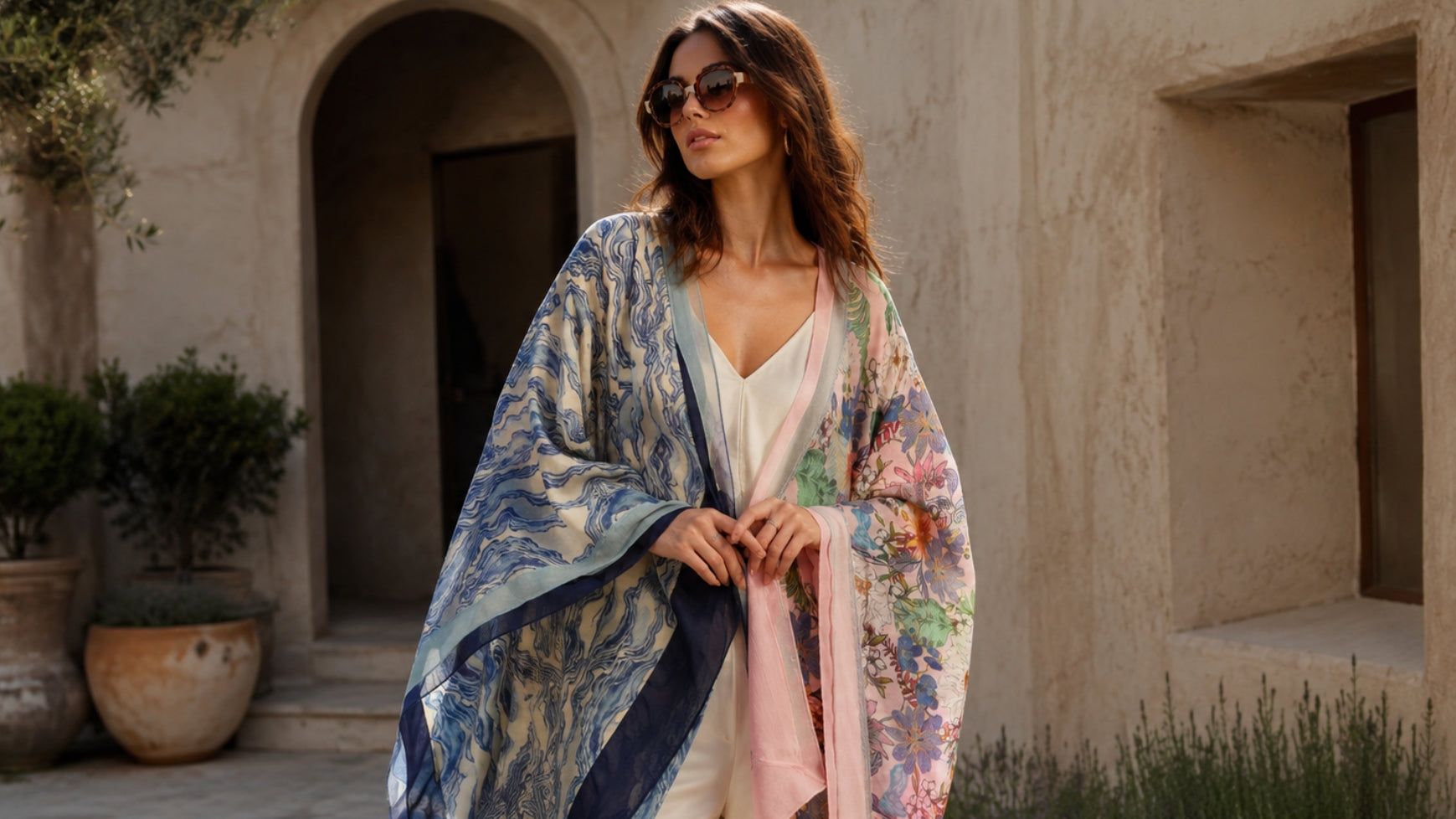
For cooler occasions, the equivalent configuration in a fine cashmere, a single-shoulder drape with the piece left long and loose, introduces warmth on one side of the body while maintaining the lightness and movement of an open, asymmetric silhouette. This is the scarf configuration that comes closest to the effect of a couture cape: present, dramatic, but entirely effortless in construction.
Method 5: The Wrap Over a Formal Dress
Learning how to wear a scarf with a formal dress is fundamentally a matter of understanding what a formal dress needs that it does not itself provide. A strapless ballgown in summer provides no warmth. A backless evening dress in a restaurant requires a layer for comfort in air-conditioned environments. A delicate chiffon column dress for a winter wedding provides no insulation for an outdoor arrival. In every case, the need is for something that adds warmth and coverage without adding the structure or formality of a coat.

The wrap in pure pashmina is the answer in each case. At its finest, Grade A fiber, hand-finished, with the depth and weight of a genuinely premium piece, a pure pashmina wrap adds all three of warmth, coverage, and a luxury of appearance that a coat cannot approach. An ivory scarf in the Maneesha Ruia collection is the classic choice for white or cream formal occasions; the Beige Cashmere Pashmina with Ostrich Feathers and Silver Swarovski Crystal is the choice for the most important evening of the season.

The certification standards behind the pieces, including GOTS-certified fabric, AZO-free dyes, and sustainably sourced fiber from heritage Changthangi herds, are as much a part of the luxury proposition as the fiber itself. These are pieces that can be worn with the full confidence that their quality is exactly what it presents as, at every level of production.
Method 6: The Bag Accent with a Dress
For occasions where the dress itself is doing all the heavy lifting and the role of the scarf is purely decorative, the bag accent is the most elegant and understated choice. Fold the silk square into a narrow band and tie it around the handle of the bag being carried, with both ends left to trail. The print moves with the bag, catches the eye at the edge of the frame, and adds the dimension of fabric, color, and artistry to the overall look without making any additional demand on the body of the outfit.
Over a strongly printed dress, a neutral bag accent (the Grand Prismatic Print in its blues, for instance, or the Santa Cruz in its muted coastal tones) provides the thread that ties the bag to the dress without creating a clash. Over a plain dress with a statement bag, the scarf on the handle amplifies the bag's presence without competing with the dress.
Matching Fabric to Occasion
The question of which scarf fabric to use with which dress is, at its core, a question of occasion and season. For warm-weather occasions such as outdoor lunches, garden parties, and summer weddings, silk is the correct choice. Light, non-warming, beautifully luminous in natural light, it adds to a summer dress what no other material can: a sense of considered artistry without a gram of added warmth.
For cooler occasions such as autumn dinners, winter events, and formal evenings in air-conditioned venues, cashmere or pure pashmina is the correct choice. At Grade A quality, these fibers provide real warmth while retaining the softness and drape that a dressed occasion demands. They sit against the skin without irritation, hold their configuration through an evening, and improve in appearance the more they are worn.
For transitional seasons like spring and early autumn, where evening temperatures can fall unexpectedly from afternoon warmth, a fine cashmere at the lighter end of the weight range is the most versatile choice: it adds warmth when needed and drapes beautifully when it is not.
The Long View
The most important consideration in choosing a scarf to wear with a dress is not any single occasion, but the full wardrobe relationship the piece will have over time. A silk square that works as a necktie with a summer dress today will also work as a bag accent with a winter coat in six months. A cashmere shawl that completes a formal dress this season will serve as a shoulder wrap over an office outfit next quarter. The pieces in the Maneesha Ruia collection are designed with precisely this versatility in mind: not accessories for one dress or one moment, but pieces that move through the entire breadth of a wardrobe across years of considered wearing.
For those building a wardrobe of scarves that address the full range of dress occasions, the place to begin is with one silk square in a print of genuine character, and one fine cashmere in a neutral that works across the wardrobe. From there, the collection deepens naturally, as each occasion reveals what it needs and each new piece answers that need with the quality of fiber and craftsmanship that makes the answer worth keeping.