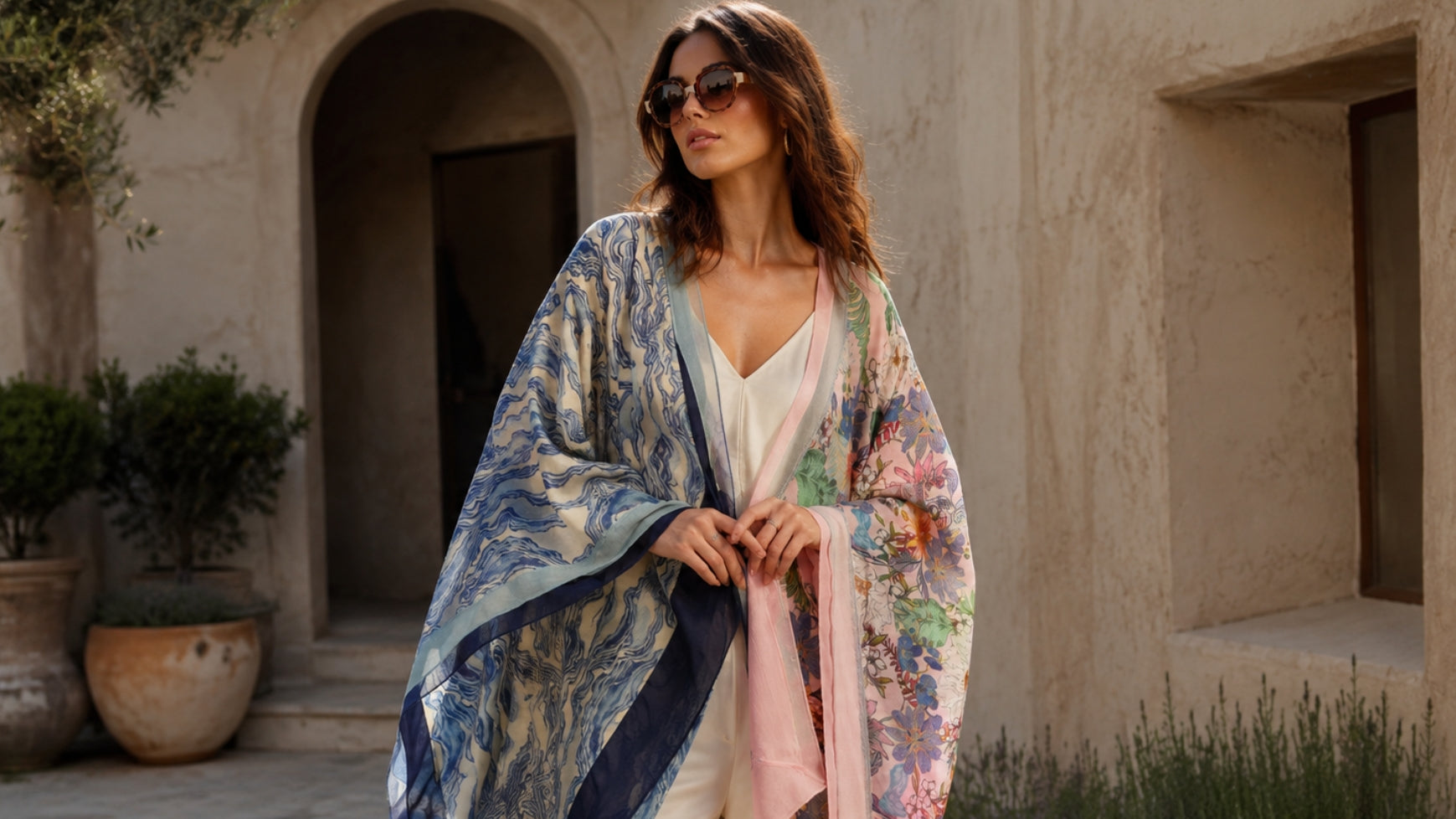
The Art of Layering: Textures, Fabrics & Unexpected Pairings


Layering is the form of visual poetry when done correctly. With contrasting textures, smooth slips beneath wools, crisp lines meeting soft drapes, and unexpected pairings that read smart and elegantly designed, it's not about layering textiles but rather about conveying a story.
At Maneesha Ruia, scarves, capes and jewelry are designed to work individually or as a component of a layered outfit. The key is to think about texture, proportion and contrast, and to let each piece have a defined role.
The Significance of Proper Layering
Wearing layers does more than just keep you warm.
-
It gives depth and texture and creates contrast
-
It addresses seasonal variation, particularly in fall when weather moves from crisp mornings to warm afternoons.
-
It elevates basics: with the correct overlay, a plain dress or top can look gallery-ready.
The Knit Cape: Start With a Structured Outer Layer
A cape can provide the foundation for a layered outfit because of its volume and silhouette.
ur Charcoal Melange Knitted Fine Wool Cape offers several textures within one piece. The knitted wool creates a soft, textured base and a built-in contrast is created by the delicate flower embroidery and the melange charcoal. In addition, the black fur collar provides movement and comfort.

How to Style it:
-
Over a smooth slip dress: Open the cape to see the flowing fabric underneath.
-
When wearing a slim skirt and top, add structure by wearing a belt over or underneath the cape’s draping.
-
As a top layer over a t-shirt and jeans, keep the layers underneath simple because the cape becomes the focal point when the bottoms are sleek.
The Cashmere Scarf: Add Contrast with an Embellished Piece
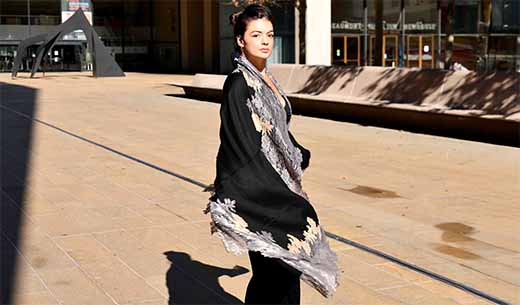
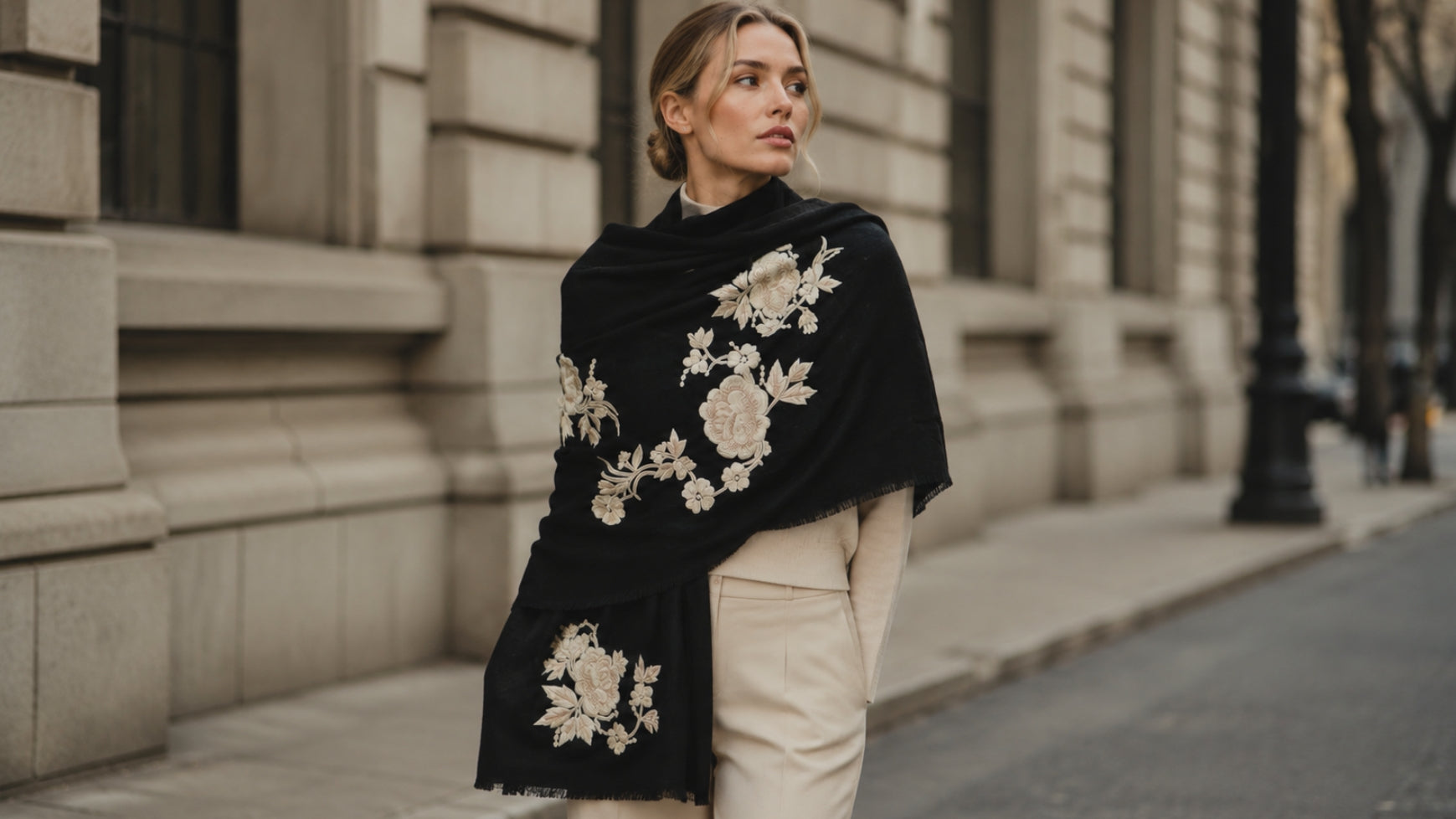
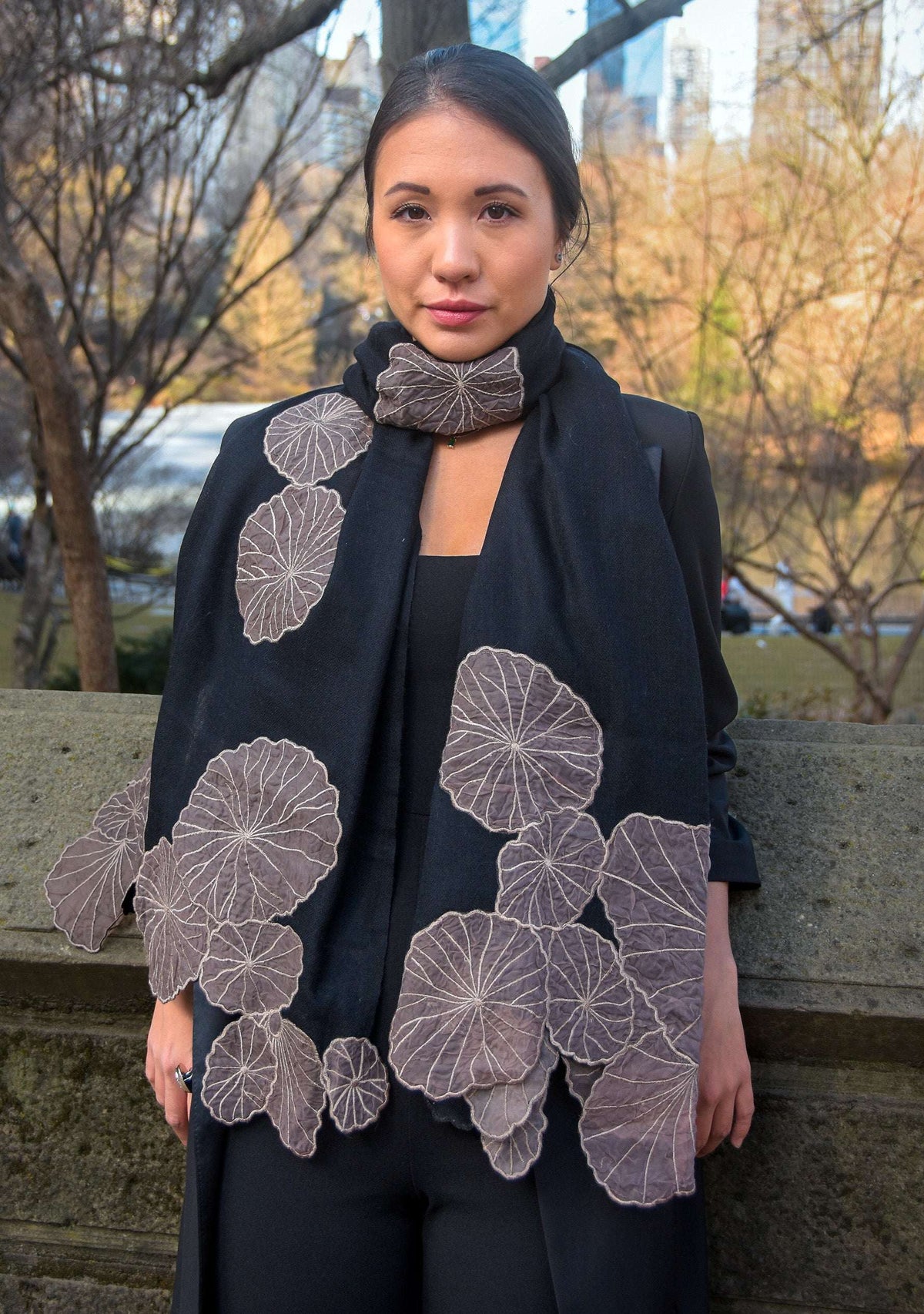
A designer scarf can add another texture or a contrasting detail to a structured outer layer Take, for example, our Black Cashmere Scarf with Taupe Lotus Leaf Appliqué. It features crushed-fabric lotus leaf appliqués flowing from both ends. This black cashmere scarf creates a contrast between the lighter appliqué details and the dark background.
How to Style it with a Cape:
-
Let it Peep Out: Drape the scarf such that one end protrudes from behind the cape’s opening, creating a striking contrast.
-
Wrap and Tuck: To ensure that the appliqués fall asymmetrically across the front of the cape, wrap loosely once around the neck.
-
Belt Trick: To secure the scarf and cape together, bring the ends of the scarf forward and thread them through a belt.
The Adaptable Neutral: A Statement in Taupe Cashmere
A cashmere scarf in taupe can act as a softer middle ground between darker outerwear and lighter layers .
Our taupe cashmere scarf with ivory pearl embroidery, for example, can sit comfortably alongside charcoal, black and other autumnal shades. The neutral tone, here, can do more than simply blend in. It can give the eye a transition between contrasting fabrics and colors.
The Last Touch: A Handmade Necklace
Add a final point of interest to your layered outfit with a handmade accessory.
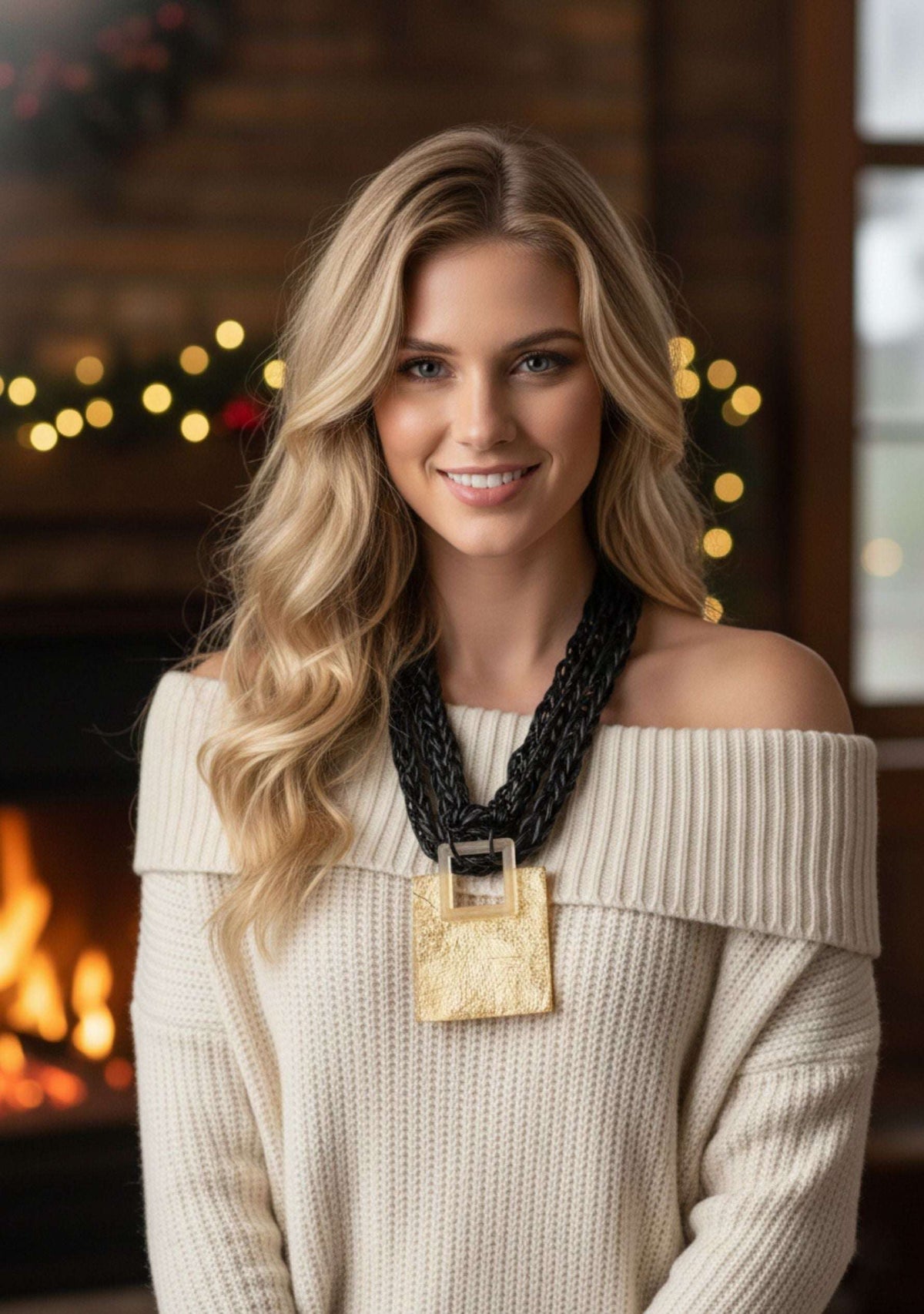
A pendant necklace, for example, can introduce a geometric element against soft cashmere and wool. Our Gold Resin Braided Cord Pendant Necklace, with its black cord braid and a square resin pendant, adds a contemporary edge to your refined look
How to style it:
-
Over the Scarf: To make the pendant the main attraction, place it on top of the scarf’s fold or knot.
-
Below the Neckline: Let the pendant show through if the inner layer has a V-neck.
Mixing Textures and Fabrics
Combining different textiles and textures is one of the most fascinating parts of layering.
Consider combinations such as:
-
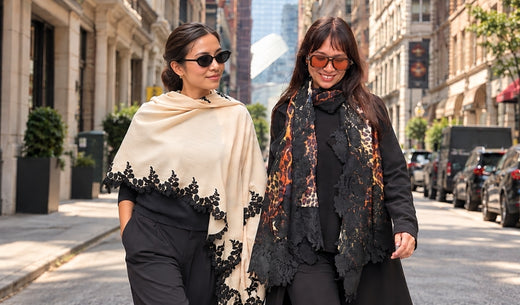
Cashmere + Lace + Linen: A cashmere scarf layered beneath a wool cape over a silk slip with lace trim strikes a balance between structure and elegance.
-
Wool Cape + Denim Skirt + Silk Camisole: The black cashmere scarf adds contrast to the outfit, while the cape rests over the denim and the silk slides underneath.
-
Knits + Metallics: To add brilliant touches to otherwise matte fabrics, wear a gold-toned or resin pendant necklace.
-
Earthy Tones + Deep Black: Warm tones like caramel and taupe are anchored by the black cashmere scarf, which allows them to breathe.
The goal is to make every layer coordinate perfectly . Allow the contrast, reverberation, and refinement of texture, colors, and ornamentation to create visual interest.
The art of layering: One Step at a Time
A simple order can help keep the proportions balanced:
-
Begin with your foundational layer: A lightweight knit or a shirt made of silk or linen.
-
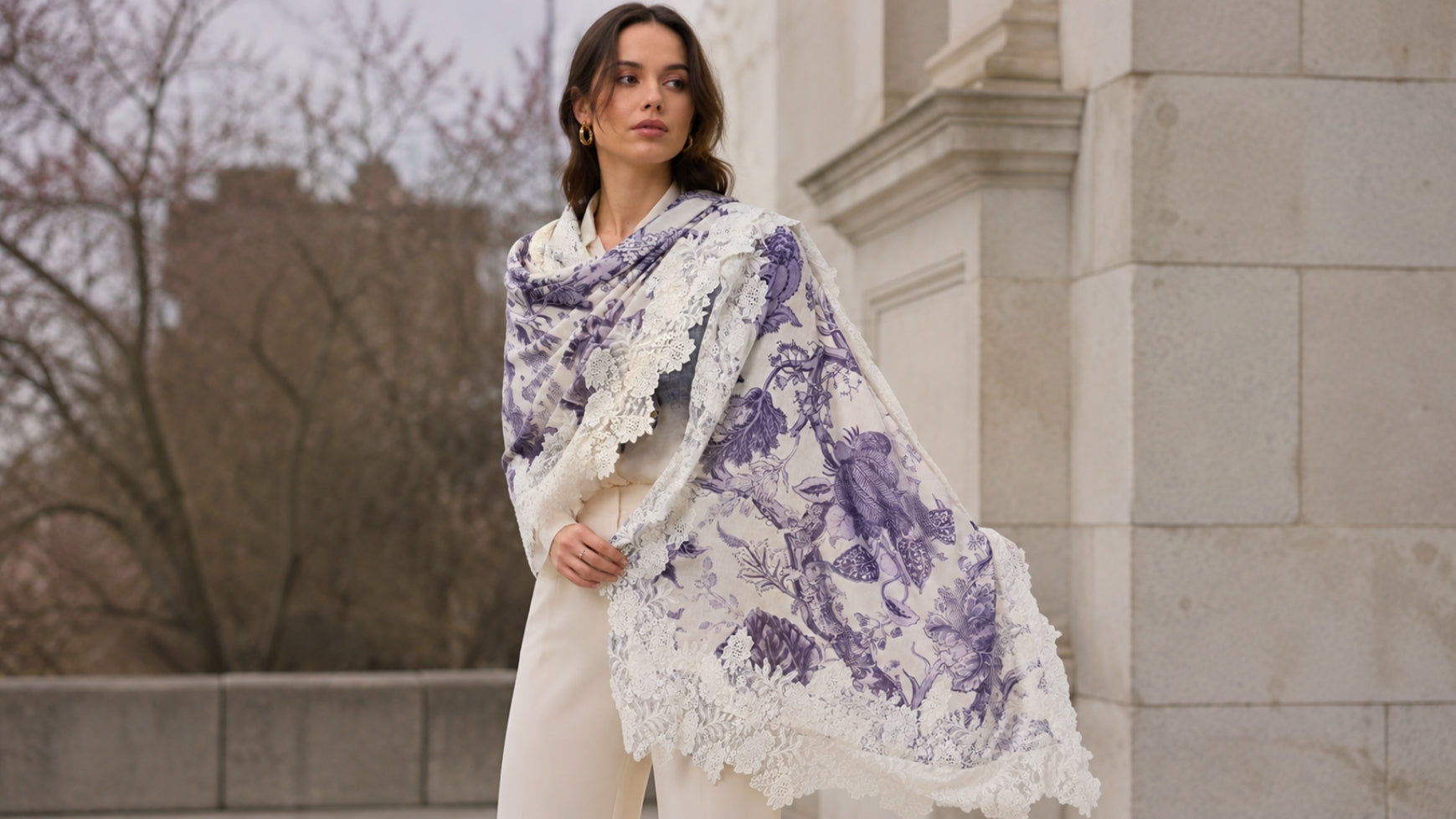
Present a distinctive scarf: Printed or the one with lace, let the scarf establish the visual direction.
-
Add a middle layer: Include the layer in between dresses, skirts, or pants that accentuate your volume.
-
Put on your outer layer: A jacket, coat or cape defines the overall silhouette.
-
Use your accessories wisely: Keep the scarf and cape in the center and add your pendant necklace or plain earrings.
-
Always keep proportion in mind: Your inner layers should be elegant if your outer layer is a cape. Your layers may experiment with volume if the cape is lean.
FAQs
1. Can you wear a statement scarf under a cape?
Yes, provided that the color of your cape is neutral or tonal. Keep the cape as a frame and let the scarf serve as the visual focal point.
2. Can you wear a necklace over a scarf or heavy layers?
Yes. When a designer necklace, such as a resin pendant, has space to shine, it looks its best. Make sure it sits on the top of the outside fold.
3. How do you layer different fabrics without looking bulky? ?
Select fabrics with varying weights (wool, cashmere, silk), and group lower friction materials (wool next to silk). Bulk is decreased by that harmony of layering.
4. What is the ideal number of scarves to wear at once?
Usually, one signature scarf is plenty. For texture, you can put a thin linen scarf underneath, but don't pile on too many heavy scarves at once.
5. Can I adapt these layering ideas for travel or warmer weather?
Yes. Simply replace the cashmere and wool with blends of light linen or silk, and style according to the same principles of drape and contrast.