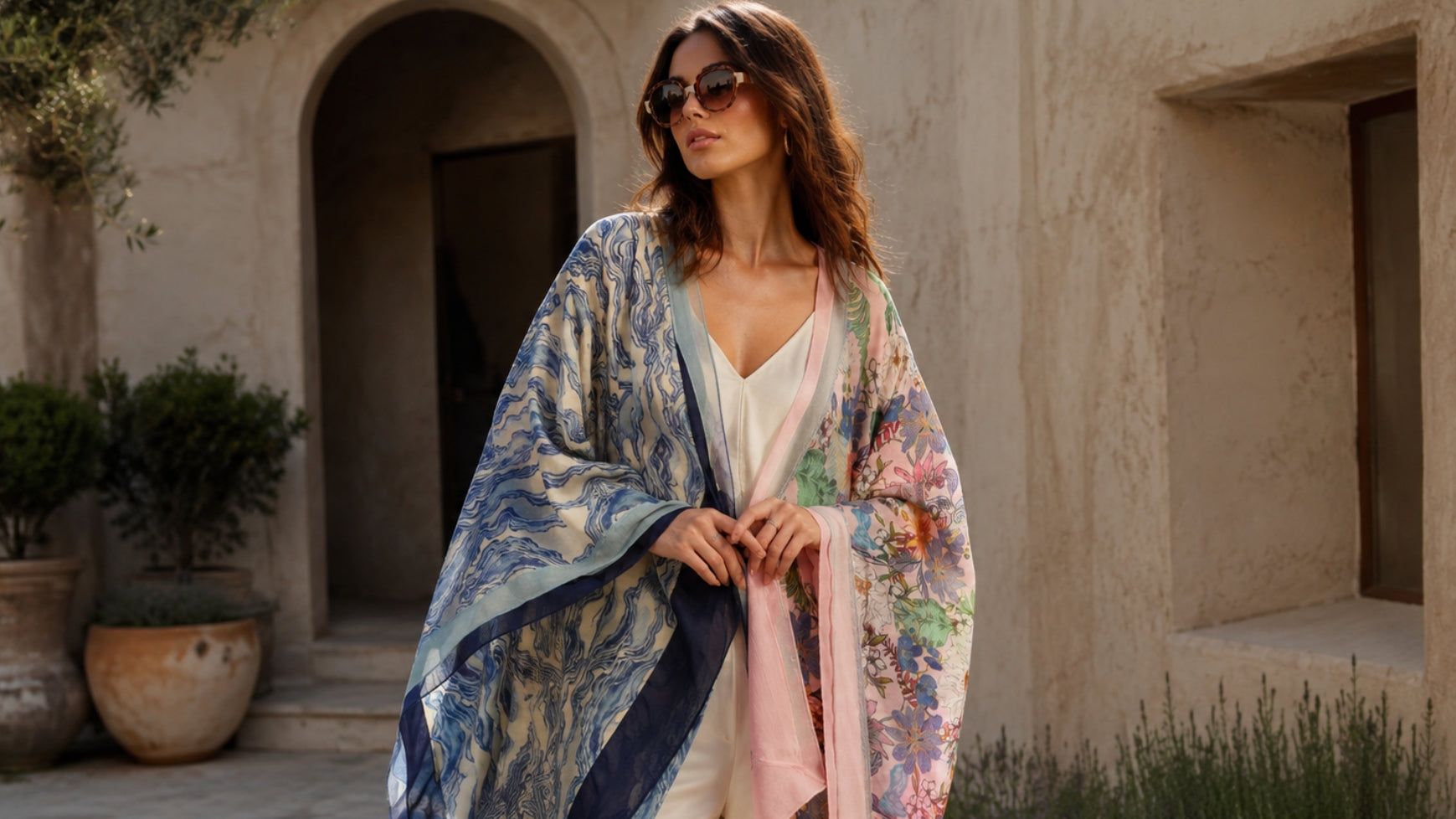
How to Wear a Neck Scarf: A Professional Styling Guide


The neck is the most intimate canvas a scarf occupies. Unlike the shoulder, which holds a wrap at a degree of remove from the body, or the bag, where a tied scarf is decorative before it is personal, the neck scarf sits at the point where clothing meets face, where every design decision is read at the closest possible distance by anyone who meets you. This is both its challenge and its authority: worn correctly, a neck scarf communicates more about the consideration behind a wardrobe than almost any other single accessory.
Understanding how to wear a neck scarf with assurance is a matter of learning three things in sequence: which fabric suits each configuration, which knot or drape method reads best in which context, and how to read the difference between what a scarf is doing for the neck and what it is doing for the outfit as a whole. This guide addresses all three, from the simplest silk knot to the structured European loop in cashmere, and introduces the specific Maneesha Ruia pieces that bring each method to its finest expression.
Fabric First: Choosing the Right Material for the Neck
Not all scarves belong at the neck, and the distinction is almost entirely about fabric weight. The neck is a place of lightness and precision. Heavy wool, however beautiful at the shoulder, compresses awkwardly at the throat and overwhelms the face. The materials that succeed at the neck share a quality of refined lightness: they fold without creating unnecessary bulk, they hold their configuration through a day of movement, and they touch the skin with a softness that is felt as comfort rather than awareness.
Silk is the definitive choice for warm-weather neck styling. Its natural drape means that a simple fold or loose knot settles at the throat with a quality of ease that no other fiber delivers. The Vagabonde silk square scarves in the Maneesha Ruia collection, at 40 by 40 inches of pure 100% silk, represent the optimal starting point for anyone learning how to wear a neck scarf for the first time. Their weight sits in a register that performs across every method in this guide.
For cooler months, a fine cashmere or pure pashmina at the neck adds measurable warmth while retaining the softness against the skin that makes a neck scarf pleasurable rather than merely practical. The Superfine Cashmere Pashmina Scarves in the Maneesha Ruia collection, woven from Grade A fiber at 12 to 16 microns, are among the finest choices available for cool-weather neck styling: present enough to add warmth, light enough to not impose.
Method 1: The Parisian Knot
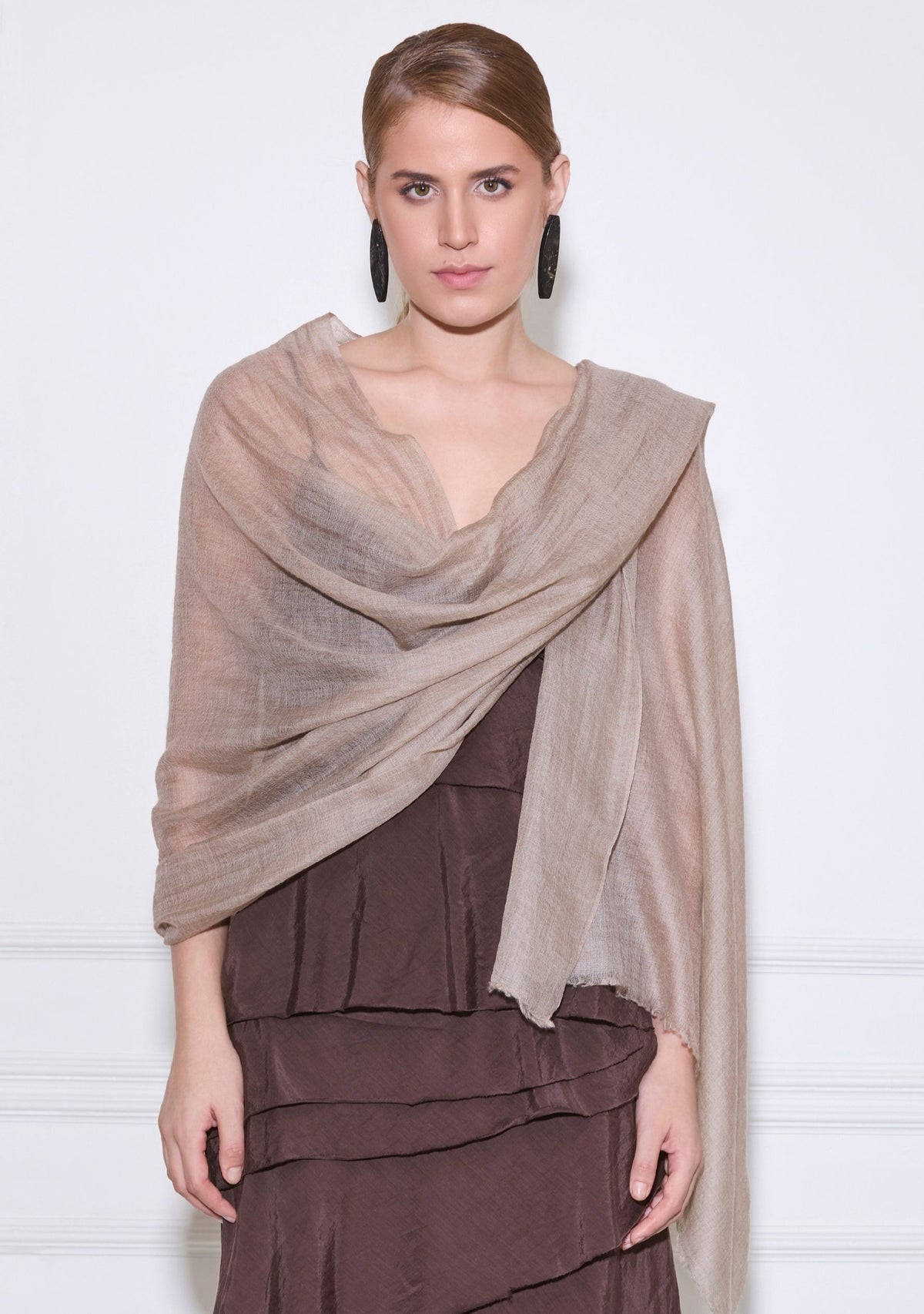
The Parisian knot is the starting point for anyone learning how to wear a neck scarf, because it is at once the simplest method and the one that rewards the finest fabric most immediately. Begin by folding the scarf in half lengthwise to form a long band. Bring it around the back of the neck so both ends, along with the loop formed by the fold, fall to the front. Thread both ends through the loop and draw gently until the knot settles at the collarbone.
The Parisian knot works because it is inherently self-adjusting. The looseness of the loop means the scarf settles into its natural position without requiring precision on the part of the wearer. In silk, it produces a soft, gathered accent that falls elegantly over an open collar. In cashmere, it adds warmth without the compression of a tighter configuration. Either way, it requires five seconds to create and looks as if it required considerably more.
Over a white linen shirt or a fine cotton poplin, the Parisian knot with a printed silk square from the Vagabonde collection is the classic expression of the considered professional wardrobe. It introduces color and artistry at the neck without making any demand on the rest of the outfit to do the same.
Method 2: The Simple Bow
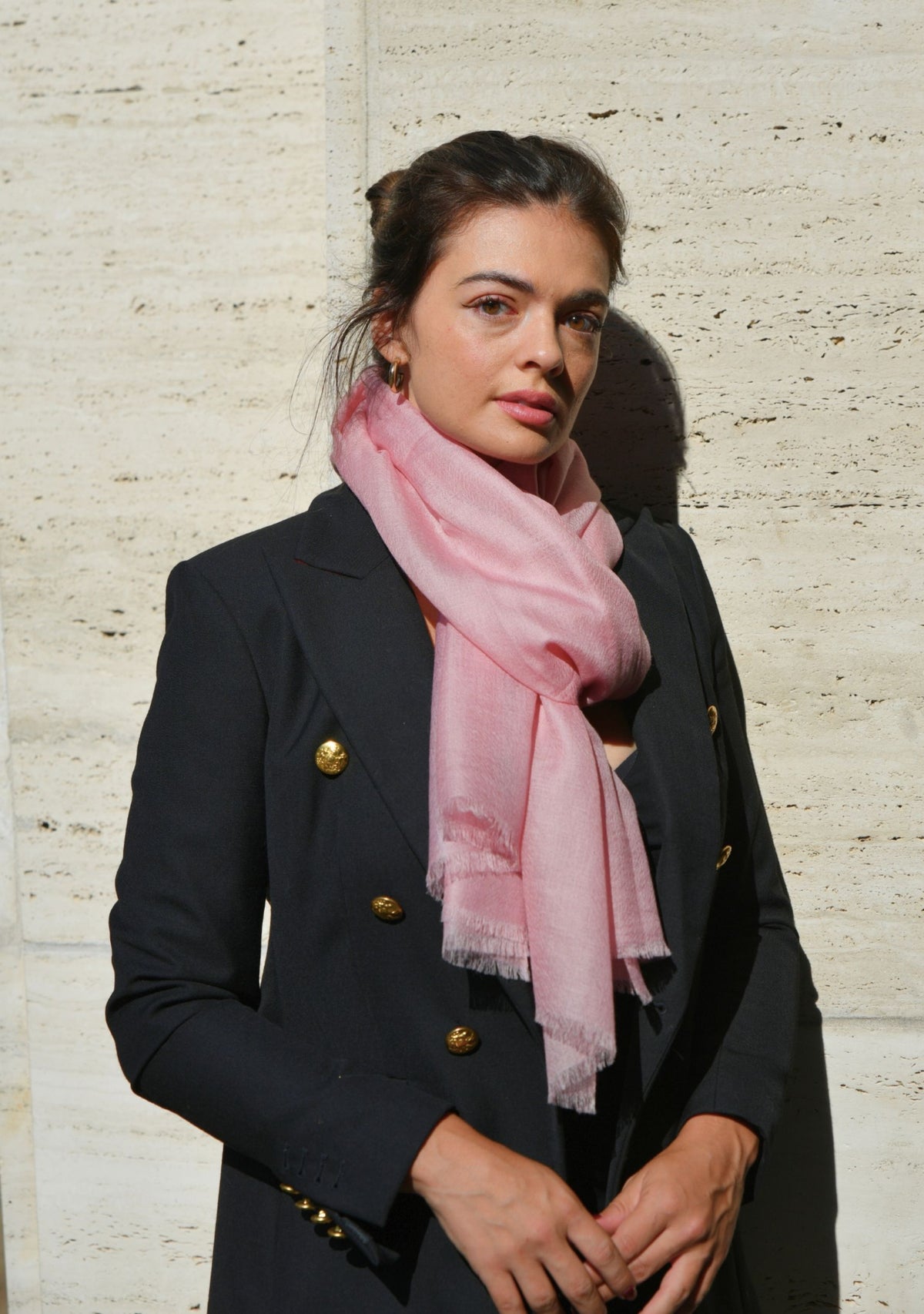
The simple bow is the most formal neck scarf configuration, and it performs best in silk, where the lightness of the fabric allows the loops of the bow to remain open and airy rather than heavy and compressed. To tie a bow at the neck, fold the scarf into a narrow band as you would for the Parisian knot, then bring it around the neck and tie a standard bow as you would with a shoe: first a crossing knot, then a looped bow with a second loop passed through.
The key to a neck scarf bow that reads as considered rather than constructed is the size of the loops. Resist the impulse to pull the bow tight. Silk performs best when the loops are left generous and slightly uneven; a bow tied to precise symmetry has the look of effort, while one that falls naturally has the look of ease. A single adjustment to bring the bow from a slight leftward drift to center is sufficient.
At the neck of a silk blouse or under the collar of a blazer, a bow-tied silk square is among the most elegantly professional choices available. The Santa Cruz Print from the Vagabonde collection, its coastal motif reading clearly even in a smaller knotted format, is a particularly strong choice for this configuration.

Method 3: The Open Drape
The open drape is the most relaxed neck scarf configuration, and it is the one most suited to heavier, warmer fabrics that would create too much bulk in a knot. Place the scarf around the back of the neck (long and rectangular scarves work better here than squares) and allow both ends to fall forward over the chest, one on each side, at even lengths. Do not knot or tie. The weight of the fabric holds the position.
The open drape reads as casual in light, summery fabrics and as quietly luxurious in fine cashmere or pashmina. Over a fine-knit turtleneck or a structured blazer in autumn or winter, a cashmere open drape transforms a straightforward outfit into something considered without adding any complexity of construction. This is the neck configuration that rewards a genuinely beautiful fiber most directly: because there is no knot, no fold, no structure imposed on the fabric, what you see is the fiber itself.
The Sand Superfine Cashmere Pashmina Scarf from the pure pashmina collection is ideally suited to this configuration: its warm neutral reads as an extension of any autumn wardrobe, and its Grade A fiber drapes with the effortlessness that this method depends on. For cooler evenings when the weight of a full coat feels excessive, this configuration provides genuine warmth while maintaining an ease of appearance that heavier outerwear cannot match.
Method 4: The European Loop
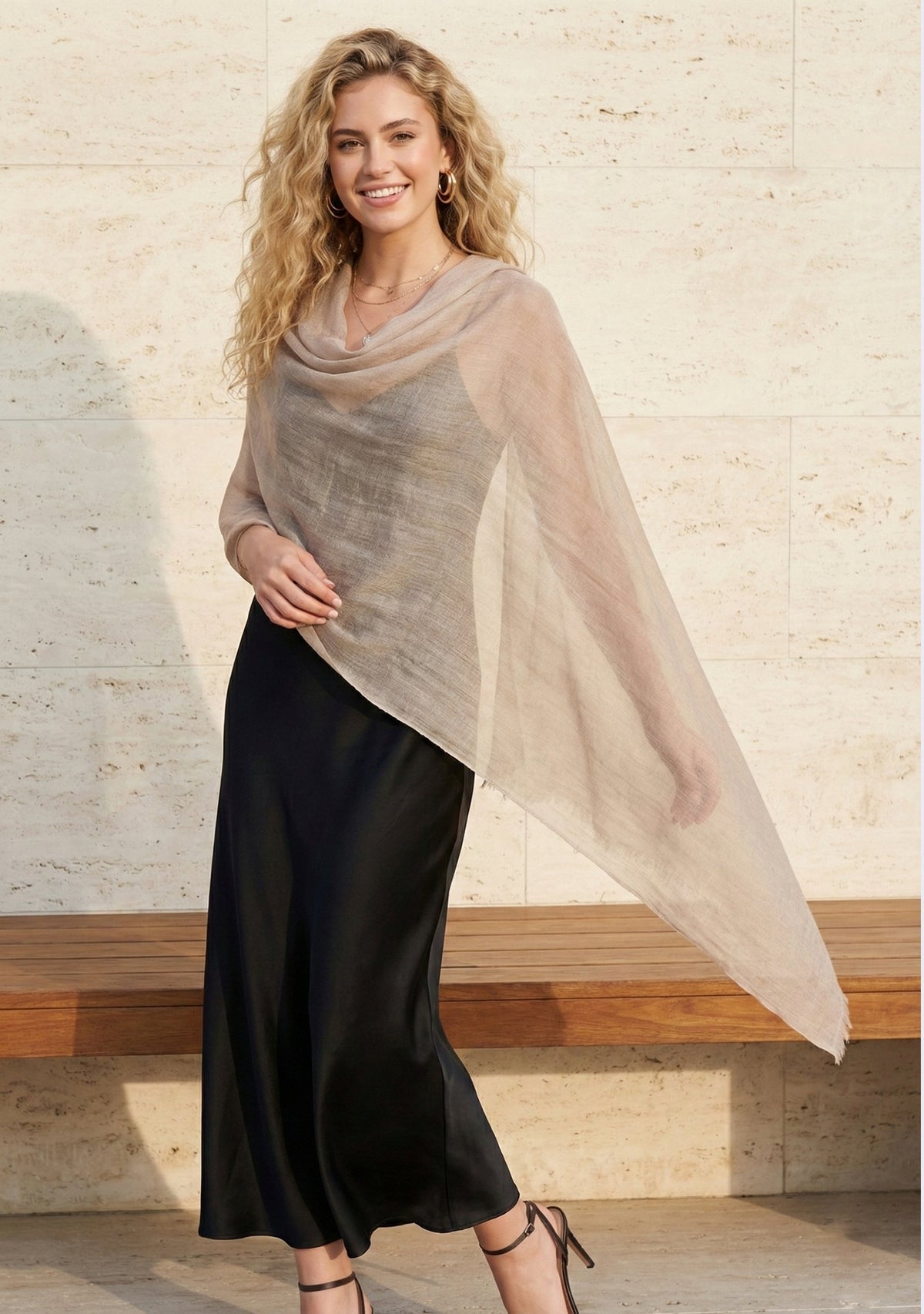
The European loop is the neck configuration designed specifically for warmth, and it is the method that makes a finer scarf, cashmere or pashmina, rather than silk, the correct choice. Fold the scarf in half to locate its midpoint. Place that midpoint at the front of the neck, then bring both ends around the back and thread them through the loop formed by the fold. Draw the ends through until the loop sits snugly at the collarbone without pressing.
The European loop provides substantially more warmth than any open drape or knot configuration because the doubled fabric covers the chest and the back of the neck simultaneously. In cashmere, it sits against the body with a softness that makes it preferable to a conventional scarf in cold weather, and it travels particularly well under a coat collar, adding warmth between the coat and the neck without creating the compression that bulkier scarves produce in the same space.
As a winter scarf, this is the configuration that performs best: warm, compact, and elegant enough to be worn at a dinner table without removal. The Charcoal Superfine Cashmere Pashmina from the Maneesha Ruia collection is the definitive choice for this method. Its deep neutral works over any winter palette, and its Grade A fiber is soft enough to wear directly against the skin throughout an evening.
Method 5: The Bandana Knot
The bandana knot is the neck configuration that has achieved the most consistent presence in contemporary fashion. Fold a square scarf diagonally to a triangle, then roll it from the point toward the long edge to create a narrow band. Tie this band around the neck with a simple knot at the center of the throat, leaving the two ends trailing forward at uneven lengths.
In silk, this configuration reads as precisely fashionable and works particularly well with minimal, clean-lined outfits: a simple cotton dress, a structured blouse, a fine-knit T-shirt. The trailing ends provide movement, and the knot provides structure. A printed scarf in the bandana configuration is one of the most direct ways to introduce pattern into a neutral wardrobe.
The Vagabonde silk square scarves are perfectly proportioned for the bandana knot: at 40 by 40 inches, there is sufficient fabric to roll to a comfortable width and still have enough length trailing to create movement. The Toucan Print or Cockatoo Print worn this way against a plain white T-shirt is a complete and considered outfit in its own right.

Wearing a Neck Scarf for Work
The professional setting rewards restraint in execution and quality in fabric. For the office, the Parisian knot or simple bow in a printed silk square is the standard: it introduces personality and color into a working wardrobe without compromising the authority of the overall look. The key is to ensure the knot is clean and centered, the scarf is pressed before wearing (silk can be gently steamed, not ironed directly), and the print is proportionate to the rest of the outfit. A bold, abstract print in a compact knot reads as considered; the same print in a loose, unstructured drape risks reading as underdressed.
For more formal professional environments, the bow configuration is the strongest choice. Tied at the throat of a white silk blouse or against a clean collar, it references the tradition of the professional silk scarf while remaining entirely contemporary in execution. The Santa Cruz Print or Grand Prismatic Print from the Vagabonde collection both have the graphic precision that reads well at this formal scale.
Wearing a Neck Scarf for the Evening
For evening, the scarf moves into a different register. The Parisian knot loosened slightly and dropped to the collarbone, the open drape in a dark cashmere, or the bandana knot in a fine silk square all perform in evening contexts depending on the formality of the occasion. A formal dinner setting rewards the open cashmere drape or the European loop: warm, elegant, and understated. A cocktail or gallery event is better served by the silk bandana or bow, where the color and movement of the fabric provide the accent that evening dressing often expects.
For the most formal evening occasions, such as a gala, an opening, or a wedding dinner, the neck scarf is best set aside in favor of a full pashmina shawl or wrap, where the greater surface area allows the fiber and any embellishment to register at the scale that formal eveningwear requires.
Care for Neck Scarves
Silk neck scarves should be dry cleaned to preserve the print registration and the sheen of the fiber across the life of the piece. Store folded, in the gift bag or a breathable cotton pouch, away from direct sunlight. Do not iron printed silk directly; if steaming is necessary, use a garment steamer held at a distance rather than pressing against the fabric surface.
Cashmere and pashmina neck scarves follow the same care protocol as full-length shawls: dry cleaning for embellished pieces, gentle hand washing in cold water with a pH-neutral detergent for plain pieces. After washing, lay flat to dry on a clean towel rather than hanging. With consistent care, both silk and cashmere neck scarves improve with age. The silk develops a subtler, deeper luster, and the cashmere softens in a way that no new piece yet achieves.
The Investment in the Right Neck Scarf
The neck scarf is an unusual purchase in that its cost-per-wear, over the life of a genuinely fine piece, is among the lowest of any accessory in the wardrobe. A silk square that is worn twice a week for fifteen years represents thousands of occasions on which it has contributed meaningfully to how the wearer presents herself. At that scale, the difference in initial cost between a fine piece and a mediocre one is irrelevant. What matters is the quality of the fiber, the precision of the print, and the integrity of the construction.
The Vagabonde silk square collection at Maneesha Ruia, and the pure pashmina collection at the finer end of the range, represent exactly this kind of investment. They are pieces designed to be worn, loved, and kept; to be passed between seasons without fading; and to become, over time, the kind of accessory that a particular woman becomes known for. That is the final measure of a neck scarf that earns its place: not that it is beautiful on the day of purchase, but that it remains so.